SCOTCAT.COM
your internet guide to all things catfish
Tatia jaracatia Pavanelli & Bifi, 2009 |
Image contributors to this species: |
ScotCat Sources: |
|
|

Other Sources: |
|


Relevant Information: |
Tatia jaracatia fits all given characters for the genus stated by Sarmento-Soares & Martins-Pinheiro (2008), but exhibits a peculiar trunk colour pattern composed of conspicuous, irregular, pale blotches over a dark background. Description: Dorsal spines (total): 1; Dorsal soft rays (total): 5; Anal soft rays: 9; Vertebrae: 31 - 32. The presence of large pale blotches over a dark brown base colouration separates this species from its congeners, except Tatia aulopygia, Tatia brunnea, Tatia dunni, Tatia galaxias, Tatia intermedia , and Tatia neivai. Differs from these species by having the combination of the following characters: anal fin-fin rays of mature males uniformly decreasing in size from third unbranched ray; caudal fin uniformly dark brown or with several dark brown chromatophores irregularly widespread, forming roundish blotches, and rarely forming stripes; caudal fin in juvenile individuals uniformly dark brown ; brown caudal-fin dots arranged as stripes (in some specimens), which might be confused with pale striae to roundish dots on caudal fins of some Tatia neivai; humeral process long, reaching or surpassing the vertical line through origin of dorsal fin; 31 or 32 post-Weberian vertebrae and 9 or 10 ribs; and 3-5 hemal spines with thicker distal portion. Aquarium Care: As with most members of this family they are very secretive and will stay hidden for most of the day. Dim lighting will see them come out for food which they eat with gutso. Will have no problem with most co-habitants but will eat small fish/fry in the aquarium. Diet: In its native habitat they feed on small invertebrates and crustaceans and in the aquarium they will eat anything given such as frozen bloodworm inserted in to their hideaway, catfish tablets, white worm (sparingly) and prawns and shrimp. They do like their food and you can see them shooting out of their hideouts and swimming in a frenzied manner to try and take all for themselves, especially when you feed them their favourite food, frozen bloodworm. Etymology: The specific name, jaracatia, is named for its type locality, Rio Jaracatiá, lower Rio Iguaçu basin. Jaracatiá is an indigenous name given to a fructiferous tree common in the region. |
Common Name: |
None |
Synonyms: |
None |
Family: |
Auchenipteridae |
Distribution: |
South America: Lower rio Iguaçu basin, upstream from the Iguaçu falls, southern Brazil. |
Size: |
6.5cm. (2½ins) |
Temp: |
22-25°c (71-77°f.) |
p.H. |
|
6.0-7.0. |
IUCN Red List |
Tatia jaracatia is an endemic species of the Iguaçu River basin, where it is naturally infrequent and scarce. However, no significant threats have been identified that endanger its population. Tatia jaracatia has been listed in the Least Concern (LC) category (IUCN 2022). |
Reference: |
Froese, R. and D. Pauly.
Editors. 2017. FishBase. World Wide Web electronic
publication. www.fishbase.org, ( 10/2017 ). |

Family: Auchenipteridae Back to Ident-A-Cat Click on Thumbnails |
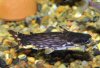 Tatia
jaracatia |
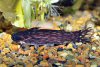 Tatia
jaracatia |
If you would like to contribute to the monthly factsheets with an article, information or photos, please e-mail me. You will of course be credited for your work.

If you would like to donate any denomination of monies to the site just click the above link button. All proceeds will go to running the site and hopefully to keep it going for a few years yet.

