SCOTCAT.COM
your internet guide to all things catfish
Bagrichthys hypselopterus (Bleeker, 1852) |
Image contributors to this species: |
Zhou Hang (2) |
ScotCat Sources: |
|

Other Sources: |
|
|


Relevant Information: |
Habitat: Inhabits main rivers over muddy substrate, in deep waters with swift current. Aquarium Care: The male 'black lancers' can be very territorial and as such can be only be kept, one male to a tank with the rest females. Although they posses a small mouth it is wide, but they don't tend to be a threat to other fishes as such, although if you keep very small fish with them they could be picked of at night as the lancer enjoys its night-time forays. Diet: Feeds on insects and small fishes. Etymology: The genus name Bagrichthys: from 'bagre', a South American name for a catfish, but is only used for African and Asian species. The specific name hypselopterus: meaning deep or long finned. |
Common Name: |
Blacklancer Catfish |
Synonyms: |
Bagrus hypselopterus |
Family: |
Bagridae |
Distribution: |
Asia: Sumatra and Borneo. Type locality: Palembang, in fluviis. |
Size: |
30.0cm (12ins) |
Temp: |
24-27°C (75-81°F) |
p.H. |
|
6.5-7.0. |
IUCN Red List |
This species is reported from the Batang Hari and Musi River drainages in Sumatra, as well as the Kapuas River drainage in western Borneo. Extent of Occurrence (EOO) is estimated to be 247000 km2. Total population size and population trend are unknown. Potential threats include deforestation resulting from logging, land conversion for agricultural use, and harvest for subsistence fisheries, but the impacts of these stressors are unknown. Although limited survey data suggests that this species is uncommon throughout its range, populations appear to be stable. It is therefore assessed as Least Concern (IUCN 2019). |
Reference: |
Ferraris, C.J. Jr.,
2007. Checklist of catfishes, recent and fossil (Osteichthyes:
Siluriformes), and catalogue of siluriform primary
types. Zootaxa 1418:1-628. |

Family: Bagridae Back to Ident-A-Cat Click on Thumbnails |
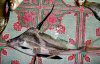 Bagrichthys
hypselopterus Bagrichthys
hypselopterus |
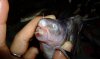 Bagrichthys
hypselopterus Bagrichthys
hypselopterusMouth view |
If you would like to contribute to the monthly factsheets with an article, information or photos, please e-mail me. You will of course be credited for your work.

If you would like to donate any denomination of monies to the site just click the above link button. All proceeds will go to running the site and hopefully to keep it going for a few years yet.

