SCOTCAT.COM
your internet guide to all things catfish
Bagrichthys macracanthus (Bleeker, 1854) |
Image contributors to this species: |
David Sands (1) Julian Dignall (1) Allan James (3) Vedran Cuncic (1) Beta Mahatvaraj (2) |
ScotCat Sources: |
|


Other Sources: |
|
|


Relevant Information: |
Description: Dorsal spines (total): 1 - 1; Dorsal soft rays (total): 7 - 7; Anal soft rays: 13 – 14. Body depth 3.7-3.9, head length 4.9-5.0 both in SL. Nasal barbels extending to or beyond eyes when laid back, maxillary barbels to operculum or pectoral fins, mandibulary and mental barbels shorter. Dorsal fin very high, with a serrated spine longer than body depth; adipose fin very large, long, originated immediately behind dorsal fin. Large broad mouth. Inner and outer mandibular barbels with straight (non- convoluted) margins; 18-29 serrae on long dorsal fin spine in adults. Habitat: Occurs in large muddy rivers. Colouration: Body dark brown to black with pale stripe along lateral line, sometimes, with 2-3 irregular yellowish brown vertical bands. Reproduction: Spawns at the beginning of the rainy season and utilizes the flooded riparian forests. Juveniles begin to appear in August. Aquarium Care: The male 'black lancers' can be very territorial and as such can be only be kept, one male to a tank with the rest females. Although they posses a small mouth it is wide, but they don't tend to be a threat to other fishes as such, although if you keep very small fish with them they could be picked of at night as the lancer enjoys its night-time forays. Diet: In its natural habitat it feeds on crustaceans, other small benthic animals and on detritus of higher plants which are much more slowly digested and remains in the gut for longer periods of time. Etymology: The genus name Bagrichthys: from 'bagre', a South American name for a catfish, but is only used for African and Asian species. The specific name macracanthus: meaning large spined. |
Common Name: |
Black Lancer |
Synonyms: |
Bagroides macracanthus, Pseudobagrichthys macracanthus, Leiocassis macropterus, Bagroides vaillanti |
Family: |
Bagridae |
Distribution: |
Asia: Sumatra. Type locality: Moara kompeh, in fluviis, Sumatra. |
Size: |
18.0cm (7¼ins) |
Temp: |
24-27°C (75-81°F) |
p.H. |
|
6.5-7.0. |
IUCN Red List |
This species is widely distributed in Sumatra, Peninsular Malaysia, and Borneo, with an estimated Extent of Occurrence (EOO) of 850000 km2. Potential localised and regional threats include deforestation and land conversion. It should also be noted that this species is often associated with habitat adjacent to blackwater peat swamp forests, which have undergone severe regional declines due to land conversion and surface water diversion for plantation agriculture. However, there is no indication that these threats have resulted in major range-wide population decline, as this species still appears relatively common in much of its range. Therefore, this species is assessed as Least Concern (IUCN 2019). |
Reference: |
Froese, R. and D. Pauly.
Editors. 2008. FishBase. World Wide Web electronic
publication. www.fishbase.org, version (12/2008). |

Family: Bagridae Back to Ident-A-Cat Click on Thumbnails |
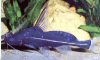 Bagrichthys
macracanthus |
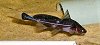 Bagrichthys
macracanthus |
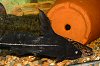 Bagrichthys
macracanthus |
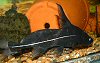 Bagrichthys
macracanthus |
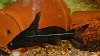 Bagrichthys
macracanthus |
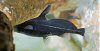 Bagrichthys
macracanthus |
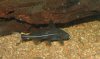 Bagrichthys
macracanthus |
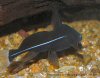 Bagrichthys
macracanthus |
If you would like to contribute to the monthly factsheets with an article, information or photos, please e-mail me. You will of course be credited for your work.

If you would like to donate any denomination of monies to the site just click the above link button. All proceeds will go to running the site and hopefully to keep it going for a few years yet.

