SCOTCAT.COM
your internet guide to all things catfish
Mystus dibrugarensis (Chaudhuri, 1913) |
Image contributors to this species: |
Beta Mahatvaraj (1) Priyankar Chakraborty (3) |
ScotCat Sources: |
|

Other Sources: |
|
|


Relevant Information: |
Habitat: This species is known from the Brahmaputra River drainage (Dibrugarh in Assam, and Dikrong in Arunachal Pradesh; Vishwanath et al. 2007) in India. The species is likely to be distributed in the upper Assam and Arunachal Pradesh. Although the current population and its trends are unknown for this species, current indications from field surveys are that this species is still relatively widespread and abundant. It is hill stream species favouring a sandy and muddy bottom. Etymology: Named after its type locality, Dibrugarh. Remarks: There are threats identified for the habitats in which this species is found in: sand mining and deforestation; however, the impacts of these threats are localised and is not across the entire species range (IUCN Red List: least concern). |
Common Name: |
None |
Synonyms: |
Macrones montanus dibrugarensis, Mystus montanus dibrugarensis, Mystus vittatus dibrugarensis |
Family: |
Bagridae |
Distribution: |
Asia: Ganga-Brahmaputra basin in India. Type Locality: Dibrugarh, Assam state, India. |
Size: |
10.0cm. (4ins) |
Temp: |
18-26°C (63-79°F) |
p.H. |
|
6.0-8.0. |
IUCN Red List |
Although the current population and its trends are unknown for this species, current indications from field surveys are that this species is still relatively widespread and abundant. Mystus dibrugarensis is assessed as Least Concern, but needs updating (IUCN 2020). |
Reference: |
Darshan, A., W. Vishwanath,
P.C. Mahanta and A. Barat, 2011. Mystus
ngasep, a new catfish species (Teleostei: Bagridae)
from the headwaters of Chindwin drainage in Manipur,
India. Journal of Threatened Taxa 3(11):2177-2183. |

Family: Bagridae Back to Ident-A-Cat Click on Thumbnails |
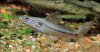 Mystus
dibrugarensis Mystus
dibrugarensis |
 Mystus
dibrugarensis Mystus
dibrugarensis |
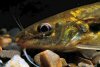 Mystus
dibrugarensis Mystus
dibrugarensisHead view |
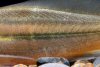 Mystus
dibrugarensis Mystus
dibrugarensisLateral line |
If you would like to contribute to the monthly factsheets with an article, information or photos, please e-mail me. You will of course be credited for your work.

If you would like to donate any denomination of monies to the site just click the above link button. All proceeds will go to running the site and hopefully to keep it going for a few years yet.

