SCOTCAT.COM
your internet guide to all things catfish
Tachysurus ichikawai (Okada & Kubota, 1957) |
Image contributors to this species: |
Nakamura, M; Keys to the Freshwater Fishes of Japan Fully Illustrated in Colors (2) Katsutoshi Watanabe (1) Totti (2) |
ScotCat Sources: |
|

Other Sources: |
|


Relevant Information: |
Description: Dorsal spines (total): 1; Dorsal soft rays (total): 6-7; Anal spines: 0; Anal soft rays: 14 - 16. Resembles Tachysurus nudiceps in having a slightly notched posterior caudal fin margin, but distinguished by having a shorter body and fewer fin rays. Three nominal species have been described for the bagrid genus of Coreobagrus i.e. C. brevicorpus Mori,1936, C. ichikawai Okado & Kubota, 1957 and C. okadai Jayaram, 1966. C. brevicorpus and C. ichikawai are confined to small geographic ranges in Korea and Japan, respectively. C. okadai was described from four specimens obtained from the Susuka River, which is within the distribution range of C. ichikawai and may be this species. Etymology: The genus name of Tachysurus: tachys, swift; oura, tail, referring to the presumed agility of T. sinensis based on its “long and nimble” tail (translation). The specific name ichikawai: in honour of Atsuhiko Ichikawa (1904-1991), Hokkaido University, the junior author’s “venefactor” [sic, benefactor] in college. Remarks: Now moved into the Tachysurus genus from Coreobagrus. Still found on some online searches as Coreobagrus ichikawai. |
Common Name: |
Nekogigi, Stumpy Bullhead |
Synonyms: |
Pseudobagrus ichikawai, Coreobagrus ichikawai |
Family: |
Bagridae |
Distribution: |
Asia: Japan, endemic to the streams in the Mie Prefecture, Honshu Island. Type locality: Miya River, Mie Prefecture, Japan. |
Size: |
11.0cm (4¼ins) |
Temp: |
24-27°C (75-81°F) |
p.H. |
|
6.5-7.0. |
IUCN Red List |
This species is restricted to a region around Ise and Mikawa Bays in Honshu, Japan. It has an extent of occurrence (EOO) of 12,100 km2 and the population is severely fragmented. Dam construction, river channelisation, water pollution and disease have caused declines in the subpopulations of this species. It is also threatened by competition with its closely related species, Tachysurus nudiceps. Therefore, it is assessed as Vulnerable (IUCN 2019). |
Reference: |
Ferraris, C.J. Jr.,
2007. Checklist of catfishes, recent and
fossil (Osteichthyes: Siluriformes), and catalogue
of siluriform primary types. Zootaxa 1418:1-628. |

Family: Bagridae Back to Ident-A-Cat Click on Thumbnails |
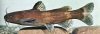 Tachysurus
ichikawai Tachysurus
ichikawai |
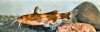 Tachysurus
ichikawai Tachysurus
ichikawaiJuvenile |
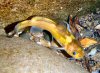 Tachysurus
ichikawai Tachysurus
ichikawai |
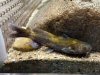 Tachysurus
ichikawai Tachysurus
ichikawai |
 Tachysurus
ichikawai Tachysurus
ichikawaiHead view |
If you would like to contribute to the monthly factsheets with an article, information or photos, please e-mail me. You will of course be credited for your work.

If you would like to donate any denomination of monies to the site just click the above link button. All proceeds will go to running the site and hopefully to keep it going for a few years yet.

