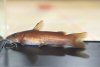
Phyllonemus
typus Boulenger, 1906
|
| |
Image
contributors to this species: |
|
ScotCat
Sources: |
 
|
Other
Sources: |
 
 |
| |
Relevant Information: |
Inhabit inshore waters to 20 m deep,
and restricted to the rocky littoral zone. Rests on the bottom
with the modified maxillary barbels. Nocturnally active meanwhile
resting beneath rocks and within interstices in the rock or
rubble substrata during the day. Oviparous. First report of
bi-parental mouthbrooding among catfishes. Stomach contents
examined consist of shrimps, occasionally debris from larval
insects, and fish remains which apparently are clupeids possibly
Limnothrissa. Aquarium Care: pH7.6; hardness
of water 12; temperature tolerance 25°C; tank capacity,
60L. Aquarium lighting should be as dark as possible as long
as fishes are visible; a peaceful, bottom-swimming fish which
prefers a set-up with rocks, plants, and driftwood in an aquarium.
This species is best kept in a group as it does like company
of its own kind and will feel more secure as it is quite a shy
catfish and can get bullied in a tank with larger aggressive
species. As with all Bagrid type fish it will be attracted to
smaller fish at night and may predate on fry, but all in all
a good addition to a mixed Rift Valley tank set-up. Diet:
In its native habitat they feed on larval insects and crustaceans
and in the aquarium they will eat most foods given such as frozen
bloodworm, catfish tablets, white worm (sparingly) prawns and
shrimp. |
Common
Name: |
Spatula-barbeled catfish
|
Synonyms: |
None |
Family: |
Claroteidae blycipitidae |
Distribution: |
Africa:
Lake Tanganyika |
Size:
|
10cm. (4ins) |
Temp: |
23-26°C
(73-79°F) |
p.H. |
7.5-8.0. |
Reference: |
Froese, R. and D. Pauly.
Editors. 2009. FishBase.World Wide Web electronic publication.
www.fishbase.org, version (07/2009).
ScotCat
Factsheet: no. 121. July 2006. |

|
|
|