SCOTCAT.COM  

your internet guide to all things catfish
≡
  • HOME
  • FACTSHEETS
    • By Month/Year
    • By Family
    • by Genus
    • by Common Names
    • By Specific Names
    • By Continent
      • Index
      • Africa
      • Asia
      • Australasia
      • Europe
      • North America
      • South America
  • GALLERIES
    • Photo Gallery
    • Art Gallery
    • Movie Gallery
    • Stamps Gallery
  • FAMILIES
    • A-B
      • Ailiidae
      • Akysidae
      • Amblycipitidae
      • Amphiliidae
      • Anchariidae
      • † Andinichthyidae
      • Ariidae
      • Aspredinidae
      • Astroblepidae
      • Auchenipteridae
      • Auchenoglanididae
      • Austroglanididae
      • Bagridae
    • C-D
      • Callichthyidae
      • Cetopsidae
      • Chacidae
      • Clariidae
      • Claroteidae
      • Cranoglanididae
      • Diplomystidae
      • Doradidae
    • H-I
      • Heptapteridae
      • Heteropneustidae
      • Horabagridae
      • Ictaluridae
    • K-L-M
      • Kryptoglanidae
      • Lacantuniidae
      • Loricariidae
      • Malapteruridae
      • Mochokidae
    • N-P
      • Nematogenyidae
      • Pangasiidae
      • Phreatobiidae
      • Pimelodidae
      • Plotosidae
      • Pseudopimelodidae
    • R-S-T
      • Ritidae
      • Schilbeidae
      • Scoloplacidae
      • Siluridae
      • Sisoridae
      • Trichomycteridae
  • ARTICLES
    • Index
    • Breeding
    • By Author
    • Cat-Articles
    • General
    • Numbered List
    • Ichthyology
    • Travel/Collecting
  • IDENT-A-CAT
  • RESOURCES
    • Citation
    • Etymology
    • Fishhouse
    • Glossary
    • Scientific Papers
    • ScotShop
  • SITE MAP
  • FB GROUP
  • HELP
    • Index
    • Catfish Anatomy
    • Convertors
    • FAQ
    • Ident-A-Cat
    • Water Chemistry

FACTSHEETS: October 2026 - no. 364

 Akysis hendricksoni Alfred, 1961


he family Akysidae includes small and miniature species which are sexually mature when only 3cm. They are characterised by their short dorsal fin with a sharp spine, a distinctive adipose fin, and a broad-based barbel developed on the posterior nostril. So this month, we focus on "Hendrickson's Catfish", a nicely patterned species from Peninsular Malaysia.
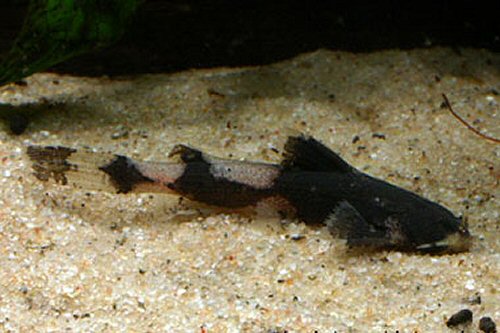
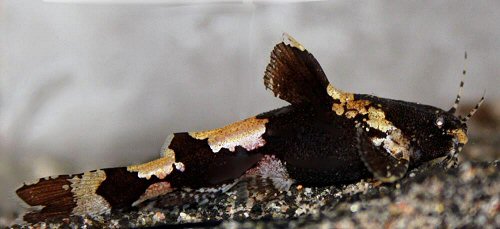
 

Akysis hendricksoni

     Akysis hendricksoni


All species in this genus possess a venomous apparatus at the base of the dorsal and pectoral spines, and though not dangerous to a healthy human, they can inflict a painful sting, so they should be handled with care when being removed from the water for any reason or during aquarium maintenance.

Like other members of its genus, an aquaria with a sand substrate interspersed with small rocks and pebbles mixed with thick clumps of plants would suffice. Unless feeding, when they are highly active, they can be overlooked in aquaria that have a sand substrate, as they like nothing better than to bury themselves, leaving only their nasal barbels, which protrude slightly from the sand to indicate where they are. So the next time you see a tank labelled ‘Akysis’, and there appears to be an empty tank, check the substrate to see if you see any barbels protruding out of the substrate.


Akysis hendricksoni


Akysis hendricksoni


Akysis hendricksoni was found syntopically with A. microps. This is the first recorded instance in which two species of Akysis are found syntopically, and it also extends the range of A. hendricksoni southwards to the Endau basin (previously only known from the Sungai Golok, Sungai Terengganu, and Sabak Bernam drainages) (Ng, H.H. and Tan, H.H., 1999).


Peninsular Malaysia


Peninsular Malaysia


South Asia: Sungai Golok, Sungai, Terengganu, Sabak Bernam, and Endau basins, peninsular Malaysia and Thailand. Type locality: Terengganu River at Kuala Brang, Terengganu, Malaya.


Peninsular Malaysia, historically known as Peninsular Malaya or simply Malaya prior to 1963, and also known as West Malaysia and the Malaysian Peninsula, is the southern part of the Malay Peninsula in Mainland Southeast Asia, along with the nearby islands that are part of Malaysia. Its area totals approximately 131,956 km2 (50,948 sq mi). It makes up nearly 40% of the total area of Malaysia; the other 60% is on the island of Borneo, also known as East Malaysia (Wikipedia 2026).

Most of Peninsular Malaysia's interior is forested, mountainous and rural, while the majority of the population and economic activity are concentrated along the coastal western half, where the country's major urban centres are located.


Common Name

Hendrickson's Catfish

Synonyms

None

Family

Akysidae

Subfamily

Akysinae

Habitat

This species is known from the Endau River drainage in southern Peninsular Malaysia northwards to the Mae Nam Kolok (Sungai Golok) drainage in southern Peninsular Thailand (Ng and Kottelat 1998, Ng and Tan 1999).

Distribution

South Asia: Sungai Golok, Sungai, Terengganu, Sabak Bernam, and Endau basins, peninsular Malaysia and Thailand. Type locality: Terengganu River at Kuala Brang, Terengganu, Malaya.

Size

5.0cm (2ins)

Temp.

18-22°C (63-71°F)

p.H.

6.5-7.5.

Characteristics

Dorsal soft rays (total): 6 - 7; Anal soft rays: 8 - 10; Vertebrae: 31 - 34. Distinguished from all its congeners by the following combination of characters: presence of 4-6 serrae on posterior edge of pectoral spine; head length 17.7-26.5% SL; head width 25.4-28.7% SL; body depth at anus 13.0-17.0% SL; depth of caudal peduncle 8.1-10.1% SL; interorbital distance 43-64% HL; length of nasal barbel 55-79% HL; length of maxillary barbel 102-167% HL; and caudal fin deeply emarginate.

Colouration

Large specimens (ca. 40 mm SL) have a normal pattern of yellow patches on a brown body similar to specimens from the Terengganu and Sungai Golok drainages (see Ng and Kottelat [1998a] for a detailed description of the colouration), but have a larger and more prominent band of yellow on the tip of the snout compared to specimens from the Terengganu and Sungai Golok drainages. Some of the smaller specimens (ca. 25 mm SL) have the yellow patches on the body much reduced in size, so much so that the whole fish appears almost uniformly brown. The latter form of colouration has not been seen in specimens from the Terengganu and Sungai Golok drainages examined (Ng, H.H. and Tan, H.H., 1999).

Aquarium Care & Compatibility

Akysis are easy to keep for any decent fishkeeper. You can keep them in small tanks (30cm wide x 20cm high x 30cm deep) with a sand bottom, small pipes, and caves. They will either bury themselves in the sand or hide in caves and pipes. They are not usually active during the day but will spring to action and eat voraciously and crazily if food is put in the tank (Taylor, Adrian).

Reproduction

Not recorded.

Sexual differences

Females have a heavier looking body shape. Males are slimmer by comparison.

Diet

Diet: They will eat bloodworm, chopped earthworms, whiteworm, daphnia, and sinking pellets (although they seem to prefer live or frozen food), (Taylor, Adrian).

Glossary of Terms

Adipose fin: Fleshy finlike projection without rays, behind the rayed dorsal fin.
Anal fin
: The median, unpaired, ventrally located fin that lies behind the anus, usually on the posterior half of the fish.
Caudal fin
: The tail.
Caudal peduncle
: The narrow part of a fish's body to which the caudal or tail fin is attached.
Dorsal fin
: The primary rayed fin(s) on top of the body.
Emarginate: Concave; used to describe the posterior border of a caudal fin which is inwardly curved; a caudal fin with a slightly concave margin.
Maxillary barbel: Pertaining to the upper jaw (maxillary barbels).
Nasal barbel: On top of the head, by the nostrils (nasal barbels).
Pectoral fin: The paired fins just behind the head.
Serrae:
Sawlike part or organ.

Etymology

Akysis: A = without; kysis = bladder, in reference to the lack of a swimbladder.
hendricksoni: In honour John R. Hendrickson (1921-2002), Vice-Chancellor of the East-West Center, University of Hawaii, who was Alfred’s first teacher in ichthyology; he also helped collect type.

IUCN Red List

This species is known from the Endau River drainage in southern Peninsular Malaysia northwards to the Mae Nam Kolok (Sungai Golok) drainage in southern Peninsular Thailand. The species' range includes at least one national park. Extent of Occurrence (EOO) is estimated to be 45700 km2. Total population size and population trend are unknown, but recent collections indicate that it is still abundant where it occurs. Regional and localised threats include deforestation resulting from logging and land conversion for agricultural practices. However, there is no evidence of major range-wide population decline. Therefore, this species is assessed as Least Concern (IUCN 2019).

References

Ferraris, C.J. Jr., 2007. Checklist of catfishes, recent and fossil (Osteichthyes: Siluriformes), and catalogue of siluriform primary types. Zootaxa 1418:1-628.
Froese, R. and D. Pauly. Editors. 2019. FishBase. World Wide Web electronic publication. www.fishbase.org, ( 12/2019 ).
Ng, H.H. 2019. Akysis hendricksoni. The IUCN Red List of Threatened Species 2019.
Ng, H.H. and M. Kottelat, 1998. The catfish genus Akysis Bleeker (Teleostei: Akysidae) in Indochina, with descriptions of six new species. J. Nat. Hist. 32:1057-1097.
The ETYFish Project Fish Name Etymology Database © Christopher Scharpf.
Ng, H.H. and Tan, H.H., 1999. The Fishes of the Endau Drainage, Peninsular Malaysia with Descriptions of Two New Species of Catfishes (Teleostei: Akysidae, Bagridae). Zoological Studies 38(3): 350-366 (1999) .

Photo Credits

© Zhou Hang.
© Adrian Taylor.
Map: Google maps. 2026.

Donate towards my web hosting bill!


If you would like to contribute to the monthly factsheets with an article, information or photos, please e-mail me. You will, of course, be credited for your work.


If you would like to donate any amount of money to the site, simply click the link above. All proceeds will go to running the site and hopefully to keep it going for a few years yet.


ScotCat Sources

Etymology = Genus Etymology-genus name

Etymology = Species Etymology-specific name


Other Sources

Search  Search

FishBase Fishbase

Catalog of Fishes Catalog of Fishes

Global Biodiversity Information Facility GBIF

FishNet2 FishNet2

iNaturalist iNaturalist

IUCN IUCN

  • Facebook about us + contact us + citation + translate + site map + scotshop + glossary + etymology +
  • help YouTube

©2026 SCOTCAT.COM