SCOTCAT.COM
your internet guide to all things catfish
Ancistrus maximus de Oliveira, Zuanon, Zawadzki & Rapp Py-Daniel, 2015 |
Image contributors to this species: |
ScotCat Sources: |
|

Other Sources: |
|


Relevant Information: |
Ancistrus maximus appeared in the Datz magazine of Sept. 1992 as L110. L157 also appeared in the same magazine in March 1994 which turned out to be the same species. Description: Dorsal spines (total): 2; Dorsal soft rays (total): 8; Anal soft rays: 5. Diagnosis: Ancistrus maximus is distinguished from all congeners, except A. dolichopterus, A. fulvus and A. latifrons, by having more branched rays in the dorsal fin (8 vs. 7); Ancistrus maximus differs from A. latifrons by the absence of hypertrophied ('spiny') odontodes in lateral plates (vs. presence of elongate and strong 'spiny' odontodes laterally oriented in A. latifrons); Ancistrus maximus differs from A. fulvus by dorsal-spine length 27.9-34.5 % SL (vs. 25.7); pectoral-spine length 30.7-42.6 % SL (vs. 26.6) and by total lateral median plates 24-25. Body shape (shape guide): elongated; Cross section: flattened. Colouration: Ancistrus maximus is distinguished from A. dolichopterus by its colour pattern, overall body colour dark brown with reddish-orange spots almost half the size of pupil in adults and with reddish-orange bands on distal portion of dorsal and caudal fins only in juveniles vs. overall body colour black or dark-gray with numerous white dots and with white band on distal portion of dorsal and caudal fins throughout life (de Oliveira et al., 2015). Aquarium Care: The Ancistrus genera make good community fish where they do not grow too big for the aquarium. Some species have different requirements in the aquarium so best to read up on the species you have whereas if they need higher oxygen requirements or not, or if they prefer cooler waters if they originate from the southern parts of South America against the species from further up north. Diet: Vegetable foods such as cucumber and courgette and also tablet and meaty foods. Reproduction: The female lays her eggs in caves or crevices... that the male has chosen and cleaned.... as a cluster. The male usually then guards the eggs after ejecting the female. The fry then cling to the sides of the cave and when they use up their yolk sac, which is around the four to seven day period, they will be ready to feed on infusuria, vegetable matter, brine shrimp naupli or micro worms. In a community tank a few will survive if enough hiding places are afforded to them. Etymology: The specific name maximus: Latin for large or great, referring to its “off-the-chart” size (200 mm SL), reached in the genus only by A. chagresi and A. centrolepis. |
Common Name: |
Orange Spot Bristlenose, L110, L157 |
Synonyms: |
None |
Family: |
Loricariidae |
Distribution: |
Brazil: Rio Branco drainage (Roraima, Brazil). |
Size: |
20.0cm. (8ins) |
Temp: |
25-29°c (77-85°f) |
p.H. |
|
6.0-7.0. |
IUCN Red List |
Not evaluated |
Reference: |
|
All L-Numbers Datz Special. |

Family: Loricariidae Back to Ident-A-Cat Click on Thumbnails |
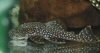 Ancistrus
maximus Ancistrus
maximus |
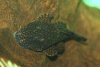 Ancistrus
maximus Ancistrus
maximus |
If you would like to contribute to the monthly factsheets with an article, information or photos, please e-mail me. You will of course be credited for your work.

If you would like to donate any denomination of monies to the site just click the above link button. All proceeds will go to running the site and hopefully to keep it going for a few years yet.

