SCOTCAT.COM
your internet guide to all things catfish
Furcodontichthys novaesi Rapp Py-Daniel 1981 |
Image contributors to this species: |
Hans-Georg Evers (1) |
ScotCat Sources: |
|

Other Sources: |
|
|


Relevant Information: |
Furcodontichthys novaesi is the only species of the monotypic genus Furcodontichthys. The presence of conspicuous fringed barbels at the lip corners is unique among the Loricariinae subfamily. The barbels have branching patterns comparable to those of the Pseudohemiodon group. Habitat: This species is endemic to Brazil where it is known from the middle Amazon at Lake Tefé and from the upper Juruá River drainage in the Solimões River basin. F. novaesi inhabits sandy substrates. Reproduction: As with closely related genera, males of Furcodontichthys show a hypertrophied development of the lips suggesting that this genus is a lip brooder. Etymology: The specific name novaesi: In honour of Brazilian ornithologist Fernando da Costa Novaes (1927–2004), Museu Paraense Emilio Goeldi (Belém, Brazil), who collected the paratypes. |
Common Name: |
None |
Synonyms: |
None |
Family: |
Loricariidae |
Distribution: |
Brazil: Solimões River basin. Type locality: Rio Solimões, lago Tefé, Caititu, Amazonas, Brasil. |
Size: |
12.0cm. (4¾ins) |
Temp: |
26-30°c (79-87°f.) |
p.H. |
|
6.0-7.5. |
IUCN Red List |
Furcodontichthys novaesi is endemic to Brazil, occurring in the Solimões and Negro river basins, and in the lower reaches of the Juruá, Trombetas, and Tapajós rivers. It is a naturally uncommon and scarce species; however, no significant threats have been identified that endanger its population. Therefore, Furcodontichthys novaesi has been categorised as Least Concern (LC), (IUCN 2022). |
Reference: |
|
Chico Mendes Institute
for Biodiversity Conservation (ICMBio). 2022.
Furcodontichthys novaesi. The IUCN Red List
of Threatened Species 2022. |

Family: Loricariidae Back to Ident-A-Cat Click on Thumbnails |
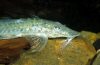 Furcodontichthys
novaesi Furcodontichthys
novaesi |
If you would like to contribute to the monthly factsheets with an article, information or photos, please e-mail me. You will of course be credited for your work.

If you would like to donate any denomination of monies to the site just click the above link button. All proceeds will go to running the site and hopefully to keep it going for a few years yet

