SCOTCAT.COM
your internet guide to all things catfish
Harttia dissidens Rapp Py-Daniel & Oliveira, 2001 |
Image contributors to this species: |
|
Kiruya Momochi (3) |
ScotCat Sources: |
|

Other Sources: |
|


Relevant Information: |
Description: Abdominal plates complete and reduced. Narrow interorbital distance 3.8-4.6 times in HL. Short pectoral spine 4.1-4.8 times in SL. Stomach reduced to small curve and almost indistinguishable from the rest of the intestine which is large, 9-10 times SL. Keeled lateral plates, 28-31. Habitat: Lives directry in the rapids, in the swiftest currents. Aquarium Care: Not the easiest genera to keep as they will need clean, oxygen rich water and a strong current. Sexual Differences: Males tend to have odontodes (hair like structures) on the first ray of the pectoral fins and the head in males is broader. Diet: Grazes on microscopic algae, mostly diatoms and green algae growing on rugged and light-coloured rocks, and submersed vegetation. Chironomid and simuliid larvae, as well as tiny crustaceans, are recorded in its diet. When scraping algae off the substrate, the fish makes vigorous mouth movements and jerky movements, probably related to its mouth making alternate grazing and attaching to the substrate. In the aquarium feed dry foods, algae wafers, Spirulina and normal tablet foods. Frozen foods, Artemia nauplii, glass worms and Daphnia. Etymology: The genus name of Hartia: –ia, belonging to: Charles Frederick Hartt (1840-1878), geologist, paleontologist and naturalist, who collected many specimens that Steindachner studied during the Thayer Expedition (1865-1866) to Brazil. The specific name of dissidens: disagreeing or dissident, i.e., different from the six other species described in the same paper (Lúcia Rapp Py-Daniel 2001). Remarks: The biggest threat to this species is the anthropic transformation of its environment, due to the change in dynamics from lotic to lentic waters caused by the construction of hydroelectric plants (UHE), and siltation of rocky beds, due to deforestation and agricultural activities. The extension of the area of influence of the hydroelectric plants planned for the Tapajós river basin, where six HPPs are already included in the 2021 ten-year energy expansion plan for the next 10 years, is around 400 km. Considering the loss of the natural environment in the river bed caused by the hydroelectric plants, added to the impacts noted on the tributaries that will not be affected by the HPP, it is suspected that there could be a decline in the species' population of at least 30% in the next 10 years. For this reason, Harttia dissidens was categorised as Vulnerable (VU) by criterion A3c (IUCN 2018). |
Common Name: |
Synonyms: |
None |
Family: |
Loricariidae |
Distribution: |
South America: Tapajós River basin. Type locality: Brazil: Pará: rio Tapajós, Pimental (56º15'16"W, 4º35'22"S). |
Size: |
15.0cm. (6ins) |
Temp: |
26-30°c (77-87°f.) |
p.H. |
|
6.0-7.5. |
IUCN Red List |
Harttia dissidens is endemic to the Tapajós River basin in the state of Pará. The extent of the stretches where the species was sampled, along the Tapajós and Jamanxim rivers, was calculated at 1,100 km. The habitat of H. dissidens is restricted to areas of rapids with stony bottoms. Due to the species' small size (approximately 15 cm in length) and based on what is known about other loricariids, it is believed that the three-generation period is less than 10 years. The greatest threat is the anthropogenic transformation of its environment, due to the alteration of lotic to lentic water dynamics caused by the construction of hydroelectric power plants (HPPs), and siltation of stony riverbeds due to deforestation and agricultural activities. The extent of the area of influence of the hydroelectric dams planned for the Tapajós River basin, where six hydroelectric plants are already included in the 2021 ten-year energy expansion plan for the next 10 years, is approximately 400 km. Therefore, according to the hydroelectric project plans, about 40% of the natural habitat of this species will be lost. Although there are stretches of the Tapajós River's tributaries that have records of the species and that will not be directly affected by the hydroelectric plants, these have been impacted by various anthropogenic actions, such as deforestation, agricultural activities, urban occupation, and road construction. Considering the loss of natural habitat in the riverbed caused by the hydroelectric plants, added to the impacts noted on the tributaries that will not be affected by the hydroelectric plants, it is suspected that there may be a decline in the species' population of at least 30% in the next 10 years. For this reason, Harttia dissidens was categorized as Vulnerable (VU) according to criterion A3c., (IUCN 2022). |
Reference: |
Evers,
H.-G. & I.Seidel: Mergus, Baensch Catfish
Atlas Volume 1, 1st English edn., 2005. Pp.944. |

Family: Loricariidae Back to Ident-A-Cat Click on Thumbnails |
 Harttia
dissidens Harttia
dissidens |
 Harttia
dissidens Harttia
dissidens |
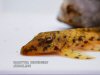 Harttia
dissidens Harttia
dissidensHead view |
If you would like to contribute to the monthly factsheets with an article, information or photos, please e-mail me. You will of course be credited for your work.

If you would like to donate any denomination of monies to the site just click the above link button. All proceeds will go to running the site and hopefully to keep it going for a few years yet.

