SCOTCAT.COM
your internet guide to all things catfish
Hemiancistrus medians (Kner, 1854) |
Image contributors to this species: |
Flair Wang (1) Suramerica Fish (2) Raphael Covain (1) Karsten Schönherr (1) Oliver Lucanus (1) CP Aqua Studio (2) |
ScotCat Sources: |
|
|

Other Sources: |
|


Relevant Information: |
Habitat: Lives in the main jets of rapids where the current is very strong. The substrate consists of bulky rocks which gives them shelter. Occurs together with the following species: Leporinus granti, Astyanax meunieri, Bryconops caudomaculatus; Parodon guyanensis, Harttia surinamensis, Hypostomus gymnorhynchus, Lasiancistrus brevipinnis and Heptapterus longior. Aquarium Care: Good aquarium habitants for a large tank and you can also house more than one species. They like water movement in the aquarium. Diet: Mainly a vegetarian diet but can also be fed tablet foods and frozen and live foods such as mosquito larvae, brine shrimp and shrimps. Etymology: The specific name medians: Latin for in the middle, presumed to be an intermediate form between long and short-finned Ancistrus, its presumed genus at the time. Remarks: Hemiancistrus is also known in some literature as Ancistomus but is also similar to the Peckoltia genera but has a longer body and a naked ventral region. |
Common Name: |
None |
Synonyms: |
Ancistrus medians |
Family: |
Loricariidae |
Distribution: |
South America: Rivière Marouini, Maroni system, French Guiana. |
Size: |
34.0cm. (13¾ins) |
Temp: |
25-29°c (77-85°f.) |
p.H. |
|
6.0-7.2. |
IUCN Red List |
Hemiancistrus medians is known from the main channel of the Maroni/Marowijne River in French Guiana and Suriname. The extent of occurrence (EOO) is estimated at 45,647 km2, and the area of occupancy (AOO) at 17,848 km2. There are negative impacts in the distributional area of Hemiancistrus medians related to urban centres along Maroni/Marowijni River basin, in which forestry, agricultural activities, pollution and sediments are increasing. Illegal gold mining is the major threat for this species, because it leads to a high sediment load in the main river channel of the upper Maroni, which is detrimental to the good health of the ecosystem, and therefore to the species, which inhabits well-oxygenated water. Additionally, the species is used for local consumption. Monitoring to continually assess these impacts to better understand their impacts and to determine whether the population remains stable is strongly recommended. Hemiancistrus medians is assessed as Least Concern (IUCN 2022). |
Reference: |
Calegari, B.B.
2022. Hemiancistrus medians. The IUCN Red
List of Threatened Species 2022. |

Family: Loricariidae Back to Ident-A-Cat Click on Thumbnails |
 Hemiancistrus medians
 |
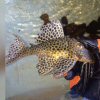 Hemiancistrus
medians Hemiancistrus
medians |
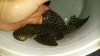 Hemiancistrus
medians Hemiancistrus
medians |
 Hemiancistrus
medians Hemiancistrus
medians |
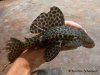 Hemiancistrus
medians Hemiancistrus
mediansTapanahony river, Suriname |
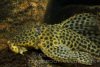 Hemiancistrus
medians Hemiancistrus
mediansHead view |
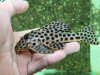 Hemiancistrus
medians Hemiancistrus
medians |
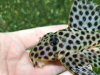 Hemiancistrus
medians Hemiancistrus
mediansHead view |
If you would like to contribute to the monthly factsheets with an article, information or photos, please e-mail me. You will of course be credited for your work.

If you would like to donate any denomination of monies to the site just click the above link button. All proceeds will go to running the site and hopefully to keep it going for a few years yet.

