SCOTCAT.COM
your internet guide to all things catfish
Hypancistrus lunaorum Armbruster, Lujan & Taphorn, 2007 |
Image contributors to this species: |
Hans-Georg Evers (1) Haakon Haagensen (1) Upscale Aquatics (1) |
ScotCat Sources: |
|

Other Sources: |
|


Relevant Information: |
Named by Armbruster, Lujan & Taphorn in their paper of 2007as Hypancistrus lunaorum (L339) along with three other species, H. contradens, (which was first thought to be H.inspector) H. furunculus (L199) and H. debilittera (L129). Description: Hypancistrus lunaorum can be distinguished from H. debilittera, H. furunculus, and H. zebra by having a dark background with white spots (vs. presence of oblique lines or vermiculations); from H. contradens by having the spots either absent or smaller than the nasal aperture diameter (vs. spots larger than the nasal aperture diameter); and from H. inspector by having the adpressed dorsal fin reaching the adipose-fin spine (vs. not reaching), the spots on the head the same size as the rest of the body (vs. much smaller on the head), the spots on the caudal fin all free (vs. spots in the upper lobes combining to form bands), and 22–23 (only one of 30 with 24) plates in the mid-ventral series (vs. 24). Similar to the Panaque/Panaqolus and Peckoltia genera but have fewer and larger teeth in the lower and upper jaw. Sexual Differences: Males posses a broader and longer head and odontodes on the posterior part of the body, behind the gill covers and on the pectoral fin spines. The latter two are a lot shorter in the females. Aquarium Care: No problem with keeping in groups but only one Hypancistrus species to a tank as there has been reports of hybridisation. Diet: Omnivores, juveniles are keen on vegetable foods whereas adults are less so. Frozen foods such as brine shrimp, mosquito larvae and mussels as well as tablet foods. Etymology: The specific name lunaorum: Named in honour of the Luna family, founders of the village of Macurucu on the Orinoco near the mouth of the Ventuari. Their progressive interest in the development of Macurucu via promotion of scientific research in the nearby region has been indispensable to the completion of recent fieldwork. |
Common Name: |
Synonyms: |
None |
Family: |
Loricariidae |
Distribution: |
South America: Venezuela, upper Orinoco drainage. Type locality: Venezuela, Amazonas, Rio Guapuchi, first major riffle complex, Rio Ventuari drainage. |
Size: |
14.0cm. (5½ins) |
Temp: |
25-29°c (77-85°f.) |
p.H. |
|
6.0-7.5. |
IUCN Red List |
Hypancistrus lunaorum is found throughout the upper mainstem Orinoco and Ventuari rivers. The upper Orinoco is a tremendously complex river system, so despite the fact that the species only occurs in medium to large rivers, the habitat is so complex that it is unlikely that subpopulations of the species could be harmed. Additionally, H. lunaorum and H. contradens may be synonymous, which would greatly increase the range of the species. Because of its fairly large range in a complex habitat, the species is considered Least Concern, but it should be monitored (IUCN 2023). |
Reference: |
|
Armbruster, J.W.
2023. Hypancistrus lunaorum. The IUCN Red
List of Threatened Species 2023. |

Family: Loricariidae Back to Ident-A-Cat Click on Thumbnails |
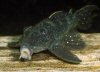 Hypancistrus lunaorum
 |
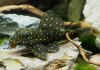 Hypancistrus
lunaorum Hypancistrus
lunaorum |
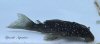 Hypancistrus
lunaorum Hypancistrus
lunaorum |
If you would like to contribute to the monthly factsheets with an article, information or photos, please e-mail me. You will of course be credited for your work.

If you would like to donate any denomination of monies to the site just click the above link button. All proceeds will go to running the site and hopefully to keep it going for a few years yet.

