SCOTCAT.COM
your internet guide to all things catfish
Lamontichthys llanero Taphorn & Lilyestrom, 1984 |
Image contributors to this species: |
ScotCat Sources: |
|


Other Sources: |
|


Relevant Information: |
There are now 6 species (2010) in this genus with L. avacanoeiro and L. parakana being added in the 2009 paper by de Carvalho Paixão & Toledo-Piza. The other four are L. filamentosus (La Monte, 1035), L. llanero Taphorn & Lilyestrom, 1984, L. maracaibero Taphorn & Lilyestrom, 1984 and L. stibaros Isbrücker & Nijssen, 1978. They can be identified by their round head, deep body, flattened caudal peduncle and the seven divided soft pectoral fin rays which is inclusive to this genera. Aquarium Care: This genus are not the easiest to keep in captivity as they will need to be fed on the right vegetarian food such as algae paste on flat stones which can be a bit of a hit and miss so would need to be tried on other veg foods and also frozen foods and other aquarium prepared foods. Water quality is also very important as any lapse such as deficient oxygen content will prove detrimental to this species. Will spend most of their time attached to the aquarium glass sides and will be difficult to feed as they will only move to the substrate for a few moments. If kept with other Loricaria species such as Sturisoma they will have to compete for food and they will eventually lose out. Reproduction: The breeding of this genera has been achieved but the raising of the fry has been problematic. Can be told apart from congeners by the long filaments on the pectorals. A Loricariid for the more experienced catfish keeper. Sexual Differences: Males tend to have odontodes (hair like structures) on the first ray of the pectoral fins and the head in males is broader. |
Common Name: |
None |
Synonyms: |
None |
Family: |
Loricariidae |
Distribution: |
Venezuela: Guanare Viejo River basin, Orinoco River drainage. Type locality: Venezuela, Estado Portuguesa, Río Guanare Viejo cerca de Hoyada. |
Size: |
20.0cm. (8ins) |
Temp: |
26-28°c (79-85°f.) |
p.H. |
|
6.0-7.5. |
Reference: |
|
Evers, H.-G. &
I.Seidel: Mergus,
Baensch Catfish Atlas Volume 1, 1st English edn.,
2005. Pp.944. |

Family: Loricariidae Back to Ident-A-Cat Click on Thumbnails |
 Lamontichthys
llanero Lamontichthys
llanero |
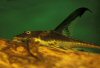 Lamontichthys
llanero Lamontichthys
llaneroHead view |
 Lamontichthys
llanero Lamontichthys
llanero |
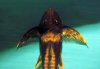 Lamontichthys
llanero Lamontichthys
llanero Dorsal view |
 Lamontichthys
llanero Lamontichthys
llanero |
 Lamontichthys
llanero Lamontichthys
llanero |
 Lamontichthys
llanero Lamontichthys
llaneroVentral view |
 Lamontichthys llanero
 |
If you would like to contribute to the monthly factsheets with an article, information or photos, please e-mail me. You will of course be credited for your work.

If you would like to donate any denomination of monies to the site just click the above link button. All proceeds will go to running the site and hopefully to keep it going for a few years yet.

