SCOTCAT.COM
your internet guide to all things catfish
Lasiancistrus heteracanthus (Günther, 1869) |
Image contributors to this species: |
ScotCat Sources: |
|

Other Sources: |
|


Relevant Information: |
Description: This species can be distinguished from L. caucanus, L. saetiger, and L. tentaculatus by having abdominal plates (vs. absent), from L. schomburgkii and L. saetiger by having dark spots in the dorsal and caudal fins (vs. white spots or all dark); and from L. guacharote by not having the abdominal plates restricted to a region near the insertion of the pectoral-fin spine. The Lasiancistrus species are quite similar to the Ancistrus genus but have a flatter profile and do not possess the tentacles on the mouths of this genera. Sexual Differences: Males have longer pectoral fins and have a heavier growth of odontodes behind the gill covers and on the edges of the snout. Aquarium Care: Relatively easy to keep but large males may tend to be territorial. Diet: Herbivore: vegetarian food, tablets and pellets, insect larvae, zooplankton and soft wood. Etymology: The specific name heteracanthus: héteros, different; acanthus, from ákantha, thorn, referring to two kinds of spines on interoperculum: a group of ~12 slender but stiff and slightly hooked spines surrounded by a ring of long setiform spine. |
Common Name: |
None |
Synonyms: |
Chaetostomus heteracanthus |
Family: |
Loricariidae |
Distribution: |
South America: Upper Río Napo of Ecuador and the lower Río Napo of Peru. Type locality: Upper Amazons, Peruvian Amazons. |
Size: |
18.0cm. (7ins) |
Temp: |
25-29°c (77-85°f.) |
p.H. |
|
6.0-7.5. |
IUCN Red List |
The species is listed as Least Concern because it has a wide range and is not exposed to any major threat. Needs updating (IUCN 2016). |
Reference: |
|
Armbruster, J.W.,
2005. The loricariid catfish genus Lasiancistrus (Siluriformes)
with descriptions of two new species. Neotrop. Ichthyol.
3(4):549-569. |

Family: Loricariidae Back to Ident-A-Cat Click on Thumbnails |
 Lasiancistrus
heteracanthus Lasiancistrus
heteracanthus |
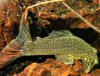 Lasiancistrus
heteracanthus Lasiancistrus
heteracanthus |
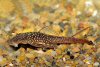 Lasiancistrus
heteracanthus Lasiancistrus
heteracanthus |
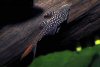 Lasiancistrus
heteracanthus Lasiancistrus
heteracanthusDorsal view |
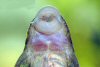 Lasiancistrus
heteracanthus Lasiancistrus
heteracanthusMouth view |
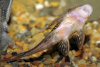 Lasiancistrus
heteracanthus Lasiancistrus
heteracanthusVentral view |
If you would like to contribute to the monthly factsheets with an article, information or photos, please e-mail me. You will of course be credited for your work.

If you would like to donate any denomination of monies to the site just click the above link button. All proceeds will go to running the site and hopefully to keep it going for a few years yet.

