SCOTCAT.COM  

your internet guide to all things catfish
≡
  • HOME
  • FACTSHEETS
    • By Month/Year
    • By Family
    • by Genus
    • by Common Names
    • By Specific Names
    • By Continent
      • Index
      • Africa
      • Asia
      • Australasia
      • Europe
      • North America
      • South America
  • GALLERIES
    • Photo Gallery
    • Art Gallery
    • Movie Gallery
    • Stamps Gallery
  • FAMILIES
    • A-B
      • Ailiidae
      • Akysidae
      • Amblycipitidae
      • Amphiliidae
      • Anchariidae
      • † Andinichthyidae
      • Ariidae
      • Aspredinidae
      • Astroblepidae
      • Auchenipteridae
      • Auchenoglanididae
      • Austroglanididae
      • Bagridae
    • C-D
      • Callichthyidae
      • Cetopsidae
      • Chacidae
      • Clariidae
      • Claroteidae
      • Cranoglanididae
      • Diplomystidae
      • Doradidae
    • H-I
      • Heptapteridae
      • Heteropneustidae
      • Horabagridae
      • Ictaluridae
    • K-L-M
      • Kryptoglanidae
      • Lacantuniidae
      • Loricariidae
      • Malapteruridae
      • Mochokidae
    • N-P
      • Nematogenyidae
      • Pangasiidae
      • Phreatobiidae
      • Pimelodidae
      • Plotosidae
      • Pseudopimelodidae
    • R-S-T
      • Ritidae
      • Schilbeidae
      • Scoloplacidae
      • Siluridae
      • Sisoridae
      • Trichomycteridae
  • ARTICLES
    • Index
    • Breeding
    • By Author
    • Cat-Articles
    • General
    • Numbered List
    • Ichthyology
    • Travel/Collecting
  • IDENT-A-CAT
  • RESOURCES
    • Citation
    • Etymology
    • Fishhouse
    • Glossary
    • Scientific Papers
    • ScotShop
  • SITE MAP
  • FB GROUP
  • HELP
    • Index
    • Catfish Anatomy
    • Convertors
    • FAQ
    • Ident-A-Cat
    • Water Chemistry

Neoplecostomus microps (Steindachner, 1877)


Image contributors to this species:

Yann Fulliquet (3) Brito, M.F.G., Lazzarotto, H., Caramaschi, E.P (2016) (3)

ScotCat Sources:

Etymology = Genus   Etymology = Species

Other Sources:

Search  Factsheet  Wikipedia  Catalog of Fishes  Global Biodiversity Information Facility  FishNet2  iNaturalist  IUCN

Relevant Information:

Abstract: Spatial distribution, suitable spawning sites, and sexual dimorphism were investigated in armored catfish Neoplecostomus microps in the Macae' River from March 2004 to March 2005. Individuals of N. microps (n ¼ 290) were limited to fast-flowing stretches, and the distribution was related to ontogenetic development. Larvae in post-flexion occurred in the marginal vegetation, and adults only in gaps between boulders and stones in the river channel. Juveniles occurred in both environments. Spawns were found in the natural habitat in rapid stretches, with the eggs attached to the lower surface of stones in openings formed in the riverbed. The number of eggs per stone ranged from 62 to 375, with significant differences among the mean sizes of the eggs. Sexual dimorphism was noticed to N. microps. The anal and urogenital papillae are separated in males and merged in females and there is an epidermal growth along the pectoral-fin spine of males (Marcelo Fulgêncio Guedes Brito et al. 2016). Neoplecostomus currently comprises 18 described species (2026), with most occurring in streams draining the Brazilian Crystalline Shield. Habitat: Neoplecostomus microps occurred only in fast-flowing stretches with stones and boulders, typical of the upper and middle stretches of the Macae' River. Description: Tooth row of lower jaw followed by one to several series of distinct, enlarged papillae; abdomen with a rather regular six-sided shield of small, prickly platelets, bordered on all sides by a naked area. Etymology: The specific name microps: Small appearance.

Common Name:

LDA034

Synonyms:

Plecostomus microps

Family:

Loricariidae

Distribution:

South America: Brazil, Paraíba do Sul River basin. Type locality: der Umgebung von Rio Janeiro [Brazil].

Size:

10.0cm. (4ins)

Temp:

20-25°c (67-77°f.)

p.H.

6.0-7.2.

IUCN Red List

This species has a wide geographic distribution in southeastern Brazil and its bio-ecology is relatively well known. Despite ongoing threats, the species is assessed as Least Concern due to its apparent tolerance to environmental degradation (IUCN 2023).

Reference:

Baensch, H.A. and R. Riehl, 1997. Aquarien Atlas, Band 5. Mergus Verlag, Melle, Germany. 1148 p.
Brito, M.F.G., Lazzarotto, H., Caramaschi, E.P. 2016. Life-history features of a rapids-dwelling loricariid catfish from Atlantic forest streams, Brazil. Biota Neotropica. 16(2): e20150068.
Burgess, W.E., 1989. An atlas of freshwater and marine catfishes. A preliminary survey of the Siluriformes. T.F.H. Publications, Inc., Neptune City, New Jersey (USA). 784 p.
Cherobim, Arieli Matheus, Lazzarotto, Henrique, & Langeani, Francisco. (2016). A new species of the catfish Neoplecostomus (Loricariidae: Neoplecostominae) from a coastal drainage in southeastern Brazil. Neotropical Ichthyology, 14(4), e160015. Epub December 22, 2016.
Ferraris, C.J. Jr., 2007. Checklist of catfishes, recent and fossil (Osteichthyes: Siluriformes), and catalogue of siluriform primary types. Zootaxa 1418:1-628.
Froese, R. and D. Pauly. Editors. 2019. FishBase. World Wide Web electronic publication. www.fishbase.org, ( 08/2019 ).
Perez, A. 2023. Neoplecostomus microps. The IUCN Red List of Threatened Species 2023.


Back to Family page

Family: Loricariidae  Back to Ident-A-Cat  Click on Thumbnails

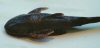
Click for full image Neoplecostomus microps
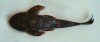
Click for full imageNeoplecostomus microps
Dorsal view
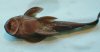
Click for full imageNeoplecostomus microps
Ventral view
Click for full imageNeoplecostomus microps
Female
Click for full imageNeoplecostomus microps
Male
Click for full imageNeoplecostomus microps
Detail of the epidermal growth (arrow) along the pelvic-fin spine of a male


If you would like to contribute to the monthly factsheets with an article, information or photos, please e-mail me. You will of course be credited for your work.


Donate towards my web hosting bill!


If you would like to donate any denomination of monies to the site just click the above link button. All proceeds will go to running the site and hopefully to keep it going for a few years yet.

  • Facebook about us + contact us + citation + translate + site map + scotshop + glossary + etymology +
  • help YouTube

©2026 SCOTCAT.COM