SCOTCAT.COM
your internet guide to all things catfish
Otocinclus macrospilus Eigenmann & Allen, 1942 |
Image contributors to this species: |
|
Mark Duffill (1) mjm_pt (2) Joost Schuitemaker (1) Johnny Jensen's Photographic Library (1) |
ScotCat Sources: |
|

Other Sources: |
|


Relevant Information: |
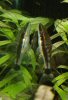
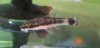
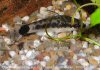
Description: Similar to O. hoppei but there is a difference in the caudal peduncle pattern. O. hoppei has a small caudal spot which does not run into the caudal fin and has only one crossbar to this pattern wheras O. macrospilus has two. Aquarium Care: This is a small group of Loricariids which do well in aquaria and will keep the algae down without harming the plants in the tank. Best to keep in a group with more males for breeding purposes. Reproduction: The females will lay eggs on the plants and tank glass after the females have been chased around the tank by the male. Like Corydoras they present a t-position breeding mode. Diet: Omnivore: algae, tablet foods, flake and small frozen foods. Etymology: The specific name macrospilus: macro-, from makrós, long or large; spílos, mark or spot, presumably referring to a “very large, isolated spot across the entire end of caudal peduncle and base of the caudal”. |
Common Name: |
Synonyms: |
None |
Family: |
Loricariidae |
Distribution: |
South America: Upper Amazon River basin. Type locality: Rio Morona, Upper Amazon basin, Peru. |
Size: |
3.5cm. (1½ins) |
Temp: |
22-26°c (71-79°f.) |
p.H. |
|
6.0-7.5. |
IUCN Red List |
The species is listed as Least Concern because it has a wide range and is not exposed to any threat that may warrant listing it in a threatened category but needs updating (IUCN 2016). |
Reference: |
Evers,
H.-G. & I.Seidel: Mergus, Baensch Catfish
Atlas Volume 1, 1st English edn., 2005. Pp.944. |

Family: Loricariidae Back to Ident-A-Cat Click on Thumbnails |
 Otocinclus
macrospilus Otocinclus
macrospilus |
 Otocinclus
macrospilus Otocinclus
macrospilus |
 Otocinclus
macrospilus Otocinclus
macrospilus |
 Otocinclus
macrospilus Otocinclus
macrospilus |
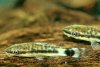 Otocinclus
macrospilus Otocinclus
macrospilus |
If you would like to contribute to the monthly factsheets with an article, information or photos, please e-mail me. You will of course be credited for your work.

If you would like to donate any denomination of monies to the site just click the above link button. All proceeds will go to running the site and hopefully to keep it going for a few years yet.

