SCOTCAT.COM
your internet guide to all things catfish
Panaqolus nocturnus (Schaefer & Stewart, 1993) |
Image contributors to this species: |
ScotCat Sources: |
|

Other Sources: |
|


Relevant Information: |
The differences between the Panaqolus and the Panaque genera is that the latter has an oval shaped mouth and the jaws have very large spatulate teeth with a single cusp, arranged in a v form and Panaqolus have a small number of spatulate teeth and are also a smaller genus. Aquarium Care: Peaceful in the aquarium but not suitable for planted tanks as they are plant eaters. Tank set-up should contain wood of some description as the Panaques need this in their diet. Plants will not work too well as they will be eaten so plenty of wood scattered around the tank with a few caves for spawning activities on a sand or small rounded gravel bed will do just fine. Provide strong aeration due to the higher temperatures involved. Diet: All Panaques and also the Panaqolus genera are wood eaters so would need this in an aquarium set-up. Feed also vegetable foods such as cucumber, courgette (zucchini) and sinking tablets. Sexual Differences: Males have long interopercular spines and their body is adorned with hair-like spines. Etymology: The specific name nocturnus: Nocturnus meaning nocturnal, referring to the dark coloration. |
Common Name: |
Dusky Panaque |
Synonyms: |
Panaque nocturnus |
Family: |
Loricariidae |
Distribution: |
South America: Santiago and Pastaza River basins, upper Napo drainage. Type locality: Peru, Departamento Amazonas, Río Santiago, near la Poza, Río Marañon basin, 4º01'24"S 77º45'06"W. |
Size: |
14.5cm. (5¾ins) |
Temp: |
24-28°c (75-83°f) |
p.H. |
|
6.0-7.5. |
IUCN Red List |
The species is listed as Least Concern because it has a relatively wide range and is not exposed to any major threat because it lives in a largely inaccessible area but needs updating (IUCN 2016). |
Reference: |
|
Ferraris, C.J. Jr.,
2007. Checklist of catfishes, recent and fossil (Osteichthyes:
Siluriformes), and catalogue of siluriform primary
types. Zootaxa 1418:1-628. |

Family: Loricariidae Back to Ident-A-Cat Click on Thumbnails |
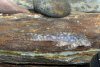 Panaqolus
nocturnus Panaqolus
nocturnus |
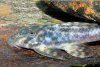 Panaqolus
nocturnus Panaqolus
nocturnusHead view |
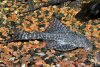 Panaqolus
nocturnus Panaqolus
nocturnus |
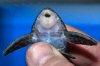 Panaqolus
nocturnus Panaqolus
nocturnusMouth view |
If you would like to contribute to the monthly factsheets with an article, information or photos, please e-mail me. You will of course be credited for your work.

If you would like to donate any denomination of monies to the site just click the above link button. All proceeds will go to running the site and hopefully to keep it going for a few years yet.

