SCOTCAT.COM
your internet guide to all things catfish
Paralithoxus pallidimaculatus (Boeseman, 1982) |
Image contributors to this species: |
|
Karsten Schönherr (2) |
ScotCat Sources: |
|

Other Sources: |
|
|


Relevant Information: |
Description: The genera Paralithoxus has been reserected in a new paper (2018) by Lujan et al. Paralithoxus can be diagnosed from other members of Lithoxini by having at most low hemispherical papillae around the oral disc margin (vs. digitate papillae in Exastilithoxus), 14 (rarely 13) branched caudal-fin rays (vs. 12 in Avalithoxus), five branched anal-fin rays (vs. four in Avalithoxus and Lithoxus), seven to nine interdorsal plates (vs. five in Avalithoxus and Lithoxus), and five rows of plates on the caudal peduncle (vs. three in Avalithoxus and Lithoxus). Similar to P. surinemensis from the same locations but P. pallidimaculatus has more operecular odontodes and is lighter coloured. Does not possess an adipose fin. Aquarium Care: Quite a demanding genera which need pure, oxygen rich water. They need plenty of hiding places and the aquarium to be very strongly filtered. Diet: Insectivores that feed in their natural habitat from insect larvae on rocks. Feed Frozen mosquito larvae, brine shrimp and Daphnia. They will also except tablet foods. Etymology: the specific name for pallidimaculatus refers to the bright spots on the body. Remarks: Still found on some online sources as Lithoxus pallidimaculatus. |
Common Name: |
None |
Synonyms: |
Lithoxus pallidimaculatus |
Family: |
Loricariidae |
Distribution: |
South America: from Cajana Creek, Gran Rio drainage, Suriname. |
Size: |
5.0cm. (2ins) |
Temp: |
23-27°c (73-81°f) |
p.H. |
|
6.0-7.5. |
IUCN Red List |
Paralithoxus pallidimaculatus is assessed as Near Threatened. Given that specimens identifiable to the species have been found in three drainage basins, it would appear that the species has a relatively large range. However, the species has not been collected from the Suriname River (type locality) since the 1960s and so it is considered possibly extinct here. It is unclear if the Saramacca/Coppename and Maroni subpopulations are conspecific, but considering them as valid gives an extent of occurrence (EOO) of 25,742 km2, exceeding the Vulnerable B1 threshold. Based on the threat of mining, there are three threat-based locations and a continuing decline in the extent and quality of habitat. Brokopondo Reservoir may have flooded a significant portion of the distribution of the species, and it is necessary that the area be explored for the species and comparisons made to the Maroni and Saramacca/Coppename subpopulations (IUCN 2023). |
Reference: |
Armbruster, J.W.
2023. Paralithoxus pallidimaculatus. The
IUCN Red List of Threatened Species 2023. |

Family: Loricariidae Back to Ident-A-Cat Click on Thumbnails |
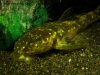 Paralithoxus
pallidimaculatus Paralithoxus
pallidimaculatusCajana Creek, Gran Rio drainage, Suriname |
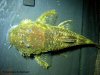 Paralithoxus
pallidimaculatus Paralithoxus
pallidimaculatusDorsal view-Cajana Creek, Gran Rio drainage, Suriname |
If you would like to contribute to the monthly factsheets with an article, information or photos, please e-mail me. You will of course be credited for your work.

If you would like to donate any denomination of monies to the site just click the above link button. All proceeds will go to running the site and hopefully to keep it going for a few years yet.

