SCOTCAT.COM
your internet guide to all things catfish
Parancistrus nudiventris Rapp Py-Daniel & Zuanon, 2005 |
Image contributors to this species: |
ScotCat Sources: |
|

Other Sources: |
|
|


Relevant Information: |
Description: Can be distinguished from P. aurantiacus by having a naked abdomen (plated in P. aurantiacus), the presence of bluish dots in living specimens or spotted in preserved specimens (uniformly dark or clear brown or mottled, never spotted in P. aurantiacus), larger interbranchial distance (39-56% in HL vs. 24.9-39.5% in P. aurantiacus), narrower interorbital distance (26.8-38% in HL vs. 38.5-43.1% in P. aurantiacus). Parancistrus nudiventris also has buccal teeth more conspicuous than in P. aurantiacus. Main skeletal differences include the presence of a strong condyle on the lateral ethmoid for articulation with the metapterygoid in P. nudiventris (not seen in P. aurantiacus); anguloarticular processes short in P. nudiventris (long in P. aurantiacus); opercle with odontodes, partly exposed in P. nudiventris (completely embedded in skin in P. aurantiacus). This genera have a broad and flattened body with large scutes. The dorsal and adipose fin is connected with a membrane and they have very large gill openings. Aquarium Care: Only fairly territorial while youngsters prefer to rest under pieces of wood and on to rockwork. Adults rest on the substrate in hiding places. Sexual Differences: Males posses a broader head and more strongly bristled pectoral spines. The bristles on the posterior of the males scutes are elongated when sexually mature. Diet: Omnivore. A varied diet with both vegetable and other foods such as tablet, live and frozen. Etymology: The specific name nudiventris: nudus (L.), bare or naked; ventris, genitive of venter (L.), belly, referring to naked (i.e., non-plated) abdomen, compared with the plated abdomen of Parancistrus aurantiacus. |
Common Name: |
L031, L176, LDA04, L300 |
Synonyms: |
None |
Family: |
Loricariidae |
Distribution: |
Brazil: Rio Xingu. Type locality: Brazil; Pará State; rio Xingu, bedrock at ilha do Bacabal, 3º23'19" S, 51º43'24". |
Size: |
25.0cm. (10ins) |
Temp: |
26-30°c (79-87°f) |
p.H. |
|
6.0-7.2. |
IUCN Red List |
Parancistrus nudiventris is endemic to Brazil and is distributed along the Xingu River, mainly in the Volta Grande region, in the state of Pará. It is a relatively abundant and frequent species, associated with rocky and rapid environments. Specimens are collected for the aquarium market, but this apparently does not represent a significant impact on the subpopulations of P. nudiventris. The main threat to its subpopulations is related to the construction of the Belo Monte hydroelectric dam and other dams planned for the Xingu River basin. Considering the area of the stretches where the species has confirmed records, it was inferred that approximately 34% will be impacted by the Belo Monte hydroelectric dam, which will represent a considerable loss of habitat and a decrease in the area occupied by P. nudiventris. Thus, it is suspected that this would lead to a population reduction of over 30% in 25 years or three generational periods, categorising Parancistrus nudiventris as Vulnerable (VU) under criterion A3c. (IUCN 2022). |
Reference: |
|
Chico Mendes Institute
for Biodiversity Conservation (ICMBio). 2022.
Parancistrus nudiventris. The IUCN Red List
of Threatened Species 2022. |

Family: Loricariidae Back to Ident-A-Cat Click on Thumbnails |
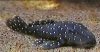 Parancistrus
nudiventris Parancistrus
nudiventris |
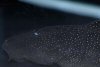 Parancistrus
nudiventris Parancistrus
nudiventrisHead view |
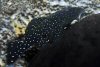 Parancistrus
nudiventris Parancistrus
nudiventris |
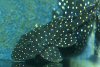 Parancistrus
nudiventris Parancistrus
nudiventris Juvenile |
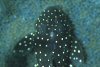 Parancistrus
nudiventris Parancistrus
nudiventrisJuvenile-Dorsal view of head |
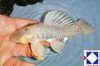 Parancistrus
nudiventris Parancistrus
nudiventris Pale coloured specimen |
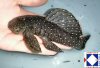 Parancistrus
nudiventris Parancistrus
nudiventrisNormal coloured specimen |
 Parancistrus
nudiventris Parancistrus
nudiventris |
If you would like to contribute to the monthly factsheets with an article, information or photos, please e-mail me. You will of course be credited for your work.

If you would like to donate any denomination of monies to the site just click the above link button. All proceeds will go to running the site and hopefully to keep it going for a few years yet.

