SCOTCAT.COM
your internet guide to all things catfish
Rhadinoloricaria bahuaja (Chang & Castro, 1999) |
Image contributors to this species: |
Steven Grant (3) Lance R. Peck (1) |
ScotCat Sources: |
|
|

Other Sources: |
|


Relevant Information: |
Description: Dorsal spines (total): 1; Dorsal soft rays (total): 6-7; Anal spines: 1; Anal soft rays: 4; Vertebrae: 33 - 34. Distinguished from all other species of Rhadinoloricaria by having more teeth (4-8 premaxillary and 8-11 mandibular teeth); more coalescing plates (17-20); maxillary barbel longer (68-109 % HL), reaching middle or proximal third of pectoral fin; barbels of lower lip more developed (16-27% HL); interorbital width greater (16-21% HL); and first ray of dorsal, pectoral and pelvic fins produced beyond branched fin rays. Furthermore, it is distinguished from R. rhami by these osteological features: tip of first dorsal-fin pterygiophore passes between paired neural spines of 8th centrum and contacts posterior border of transverse process of 7th centrum; pectoral fin reaches anterior half of pelvic fin; pelvic skeleton with ischiac process of basipterygia elongated, longer than in R. rhami; and last pterygiophore of anal fin bears a bifid posterior process, ending at the middle of haemal spine of 18th centrum. Habitat: Occurs in the main river and major tributaries, always over sandy beaches. Reproduction: The holotype (male, 11.59 cm SL) carried 53 fertilized eggs (3.2-3.4 mm diameter) on its lips and another specimen was carrying 31 unfertilized eggs. Aquarium Care: Likes to bury itself in a deep sandy bottom substrate with only the eyes being visible so you would need to provide this for aquarium maintenance. Diet: In its natural habitat the stomach contents included larvae of aquatic insects, small seeds and debris. Feed with tablet foods, frozen mosquito larvae, daphnia etc. Etymology: The genus name Rhadinoloricaria: rhadinós, slender, lithe or tapering, referring to acute snout of R. macromystax (Isaäc J. H. Isbrücker, pers. comm.); Loricaria, type genus of family.The specific name bahuaja: Named for Parque Nacional Bahuaja-Sonene, southeastern Peru, through which type locality (Río Tambopata) flows. |
Common Name: |
None |
Synonyms: |
Crossoloricaria bahuaja |
Family: |
Loricariidae |
Distribution: |
South America: Madre de Dios basin in Peru; Rio Grande and Rio Manuripe in Pando, Bolivia. Type Locality: Tambopata River (12°47'05"S, 69°18'55"W), Tambopata Province, Madre de Dios Department, Peru. |
Size: |
16.5cm (6½inch) |
Temp: |
25-29°c (77-85°f) |
p.H. |
|
6.5-7.5. |
IUCN Red List |
This species is listed as Least Concern (IUCN Red List) because it is widely distributed, is locally abundant, is present in protected areas and because there are no major widespread threats currently affecting its population in the Peru population (IUCN 2016). |
Reference: |
Chang, F. and E. Castro,
1999. Crossoloricaria bahuaja, a new loricariid
fish from Madre de Dios, southeastern Peru. Ichthyol.
Explor. Freshwat. 10(1):81-88. |

Family: Loricariidae Back to Ident-A-Cat Click on Thumbnails |
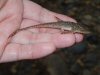 Rhadinoloricaria bahuaja
 |
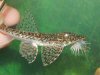 Rhadinoloricaria
bahuaja Rhadinoloricaria
bahuajaHead view |
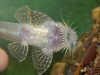 Rhadinoloricaria
bahuaja Rhadinoloricaria
bahuajaVentral view |
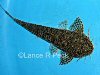 Rhadinoloricaria bahuaja
 |
If you would like to contribute to the monthly factsheets with an article, information or photos, please e-mail me. You will of course be credited for your work.

If you would like to donate any denomination of monies to the site just click the above link button. All proceeds will go to running the site and hopefully to keep it going for a few years yet.

