SCOTCAT.COM
your internet guide to all things catfish
Rhinotocinclus britskii Boeseman, 1974 |
Image contributors to this species: |
ScotCat Sources: |
|

Other Sources: |
|
|


Relevant Information: |
A new genus has been erected, Rhinotocinclus, (2022) with the type species of Parotocinclus longirostris Garavello, 1988. Abstract: A new genus of Hypopopomatinae armored catfish is described from the northern portions of South America, namely the Amazon, Orinoco and Guianan coastal drainages. The new genus is diagnosed from all remaining hypoptopomatines by having the canal cheek plate on the ventral surface of the head posteriorly elongated and contacting the cleithrum, in addition to other features that distinguish the new genus from specific genera. Five new species are described and 18 species currently allocated in Parotocinclus, Hisonotus, and Curculionichthys are transferred to the new genus and rediagnosed. Parotocinclus amazonensis and P. aripuanensis are considered junior synonyms of P. britskii. The secondary sexual dimorphism of the members of the new genus is detailed and illustrated. Morphological characters are used to delimit four phenotypic groups of species that might have phylogenetic significance, which still have to be properly tested. A key to the species is offered and diagnoses, illustrations, and distribution maps are provided for all species (Reis & Lehmann 2022). Description: Rhinotocinclus britskii is distinguished from R. acuen, R. bockmanni, R. chromodontus, R. dani, R. dinizae, R. hera, R. jumaorum, R. pentakelis, R. marginalis n. sp., and R. loxochelis n. sp. by possessing an adipose fin (vs. adipose fin absent), and by having a Y-shaped light mark from the snout tip to each nostril (vs. light mark V-shaped or present as two separate lines from snout tip diverging to each nostril. It is distinguished from R. collinsae, R. halbolthi, and R. hardmanni by lacking accessory teeth on both premaxilla and dentary (vs. accessory teeth present ); the odontodes on the ventral surface of first pelvic-fin ray bent and pointing mesially (vs. odontodes aligned with main ray axis ); a triangular dark spot on the anterior portion of the dorsal-fin membrane (vs. dorsal-fin spot absent); a Y-shaped light mark from snout tip to nostrils (vs. Y-shaped light mark absent); and a larger orbit, 27.8–39.0% snout length (vs. orbit 18.9–24.6% snout length). Rhinotocinclus britskii is distinguished from R. eppleyi, R. longirostris, R. polyochrus, R. variola, R. yaka, R. discolor n. sp., R. isabelae n. sp., and R. pilosus n. sp. by having the snout more broadly rounded (Fig. 12B; vs. snout more acutely pointed ); dark bars on body narrower and more widely spaced (Fig. 7A; vs. dark bars on body wider and closer together, Fig. 7B); and one plate between the posterior border of the rostral plate and the nostril (Fig. 12B; vs. 2–4 plates, Fig. 12A). It is distinguished from R. kwarup by having fewer premaxillary teeth (15–29, mode 23, vs. 28–34, mode 32), and fewer dentary teeth (15–29, mode 20 and 25, vs. 27–33, mode 29 ); and by having the colour pattern with less broken marks (vs. colour pattern with more broken marks, mottled) (Reis & Lehmann 2022). Aquarium Care: This is a dwarf species which can be problematic to keep as it will need to be kept by their own or at least with other dwarf species as they will find it difficult to compete for food in the hurly burly of a community tank. Diet: Artemia naupli and vegetable matter. Remarks: Most online searches at the moment (2022) will still give you the old genus name of Parotocinclus. |
Common Name: |
Aligator otocinclus |
Synonyms: |
Parotocinclus amazonensis, Parotocinclus aripuanensis, Parotocinclus britskii |
Family: |
Loricariidae |
Distribution: |
South America: Orinoco River basin and Atlantic coastal drainages of the Guianas. Type locality: Left tributary of Coppename River, Surinam, 3º51'N, 56º55'W. |
Size: |
3.0cm. (1¼ins) |
Temp: |
26-29°c (79-85°f) |
p.H. |
|
6.5-7.5. |
Reference: |
Evers, H.-G. &
I.Seidel: Mergus, Baensch Catfish Atlas Volume
1, 1st English edn., 2005. Pp.944. |

Family: Loricariidae Back to Ident-A-Cat Click on Thumbnails |
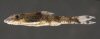 Rhinotocinclus
britskii Rhinotocinclus
britskii |
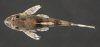 Rhinotocinclus
britskii Rhinotocinclus
britskiiDorsal view |
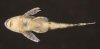 Rhinotocinclus
britskii Rhinotocinclus
britskiiVentral view |
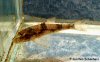 Rhinotocinclus
britskii Rhinotocinclus
britskii |
If you would like to contribute to the monthly factsheets with an article, information or photos, please e-mail me. You will of course be credited for your work.

If you would like to donate any denomination of monies to the site just click the above link button. All proceeds will go to running the site and hopefully to keep it going for a few years yet.

