SCOTCAT.COM
your internet guide to all things catfish
Rhinotocinclus collinsae (Schmidt & Ferraris, 1985) |
Image contributors to this species: |
ScotCat Sources: |
|
|

Other Sources: |
|


Relevant Information: |
A new genus has been erected, Rhinotocinclus, (2022) with the type species of Parotocinclus longirostris Garavello, 1988. Abstract: A new genus of Hypopopomatinae armored catfish is described from the northern portions of South America, namely the Amazon, Orinoco and Guianan coastal drainages. The new genus is diagnosed from all remaining hypoptopomatines by having the canal cheek plate on the ventral surface of the head posteriorly elongated and contacting the cleithrum, in addition to other features that distinguish the new genus from specific genera. Five new species are described and 18 species currently allocated in Parotocinclus, Hisonotus, and Curculionichthys are transferred to the new genus and rediagnosed. Parotocinclus amazonensis and P. aripuanensis are considered junior synonyms of P. britskii. The secondary sexual dimorphism of the members of the new genus is detailed and illustrated. Morphological characters are used to delimit four phenotypic groups of species that might have phylogenetic significance, which still have to be properly tested. A key to the species is offered and diagnoses, illustrations, and distribution maps are provided for all species (Reis & Lehmann 2022). Etymology: Rhinotocinclus masc., from the Greek (Rhinos), beak, snout and Otocinclus, a genus of Hypoptopomatinae, in allusion to the conspicuous and elegant snout of most of its species. Remarks: The type-locality of R. collinsae was originally described as “Guyana, Essequibo Province, tributary to Takutu River about 2 mi from Mazarahally Takutu lumber camp in Takutu Mountains, approx. 06o15’N 59o05’W, the type specimens being collected by Robert E. Schmidt and Antonios Pappantoniou on 17 August 1983. Despite the approximate coordinates provided suggest the locality is in the lower Mazaruni River, the Takutu River is a well know tributary to the upper Branco of the Amazon basin. Trying to solve this apparent inconsistency, we found a collecting locality of Apistogramma ortmanni at the AMNH collected by the same collector in 1983 (AMNH 72979; field station RES-83-16) that reads: “Little Takutu River and tributaries, Mazarahally Takutu lumber camp, west shore Mazaruni River”. Despite we could not locate this site precisely on a map, it names the river as “Little Takutu”, which differentiates from the Branco tributary Takutu River, and undoubtedly sets the locality in the lower Mazaruni basin. For this reason, the original type-locality of Rhinotocinclus collinsae is herein corrected to Little Takutu River. Rhinotocinclus collinsae is currently not assessed by IUCN or other regional initiative. (Reis & Lehmann 2022). Further Remarks: Most online searches at the moment (2022) will still give you the old genus name of Parotocinclus collinsae. |
Common Name: |
None |
Synonyms: |
Parotocinclus collinsae |
Family: |
Loricariidae |
Distribution: |
Soth America: Occurs in the Essequibo River basin, including the Potaro and Mazaruni rivers, in the regions of Cuyuni-Mazarui and Potaro-Siparuni of Guyana. Type Locality: Little Takutu River. |
Size: |
5.0cm. (2ins) |
Temp: |
23-26°c (73-79°f.) |
p.H. |
|
6.5-7.2. |
Reference: |
|
Burgess, W.E.,
1989. An atlas of freshwater and marine catfishes.
A preliminary survey of the Siluriformes. T.F.H. Publications,
Inc., Neptune City, New Jersey (USA). 784 p. |

Family: Loricariidae Back to Ident-A-Cat Click on Thumbnails |
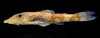 Rhinotocinclus
collinsae Rhinotocinclus
collinsaeFemale, creek tributary to Little Takutu River, Cuyuni-Mazaruni, Guyana |
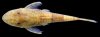 Rhinotocinclus
collinsae Rhinotocinclus
collinsaeDorsal view-Female, creek tributary to Little Takutu River, Cuyuni-Mazaruni, Guyana. |
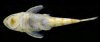 Rhinotocinclus
collinsae Rhinotocinclus
collinsaeVentral view-Female, creek tributary to Little Takutu River, Cuyuni-Mazaruni, Guyana. |
If you would like to contribute to the monthly factsheets with an article, information or photos, please e-mail me. You will of course be credited for your work.

If you would like to donate any denomination of monies to the site just click the above link button. All proceeds will go to running the site and hopefully to keep it going for a few years yet.

