SCOTCAT.COM
your internet guide to all things catfish
Rhinotocinclus yaka (Lehmann, Lima & Reis, 2018) |
Image contributors to this species: |
ScotCat Sources: |
|
|

Other Sources: |
|


Relevant Information: |
A new genus has been erected, Rhinotocinclus, (2022) with the type species of Parotocinclus longirostris Garavello, 1988. Abstract: A new genus of Hypopopomatinae armored catfish is described from the northern portions of South America, namely the Amazon, Orinoco and Guianan coastal drainages. The new genus is diagnosed from all remaining hypoptopomatines by having the canal cheek plate on the ventral surface of the head posteriorly elongated and contacting the cleithrum, in addition to other features that distinguish the new genus from specific genera. Five new species are described and 18 species currently allocated in Parotocinclus, Hisonotus, and Curculionichthys are transferred to the new genus and rediagnosed. Parotocinclus amazonensis and P. aripuanensis are considered junior synonyms of P. britskii. The secondary sexual dimorphism of the members of the new genus is detailed and illustrated. Morphological characters are used to delimit four phenotypic groups of species that might have phylogenetic significance, which still have to be properly tested. A key to the species is offered and diagnoses, illustrations, and distribution maps are provided for all species (Reis & Lehmann 2022). Description: Rhinotocinclus yaka is distinguished from R. acuen, R. bockmanni, R. chromodontus, R. dani, R. dinizae, R. hera, R. jumaorum, R. pentakelis, R. marginalis n. sp., and R. loxochelis n. sp. by possessing an adipose fin (vs. adipose fin absent), and by having a Y-shaped light mark from the snout tip to each nostril (vs. light mark V-shaped or present as two separate lines from snout tip diverging to each nostril). It is distinguished from R. collinsae, R. halbolthi, and R. hardmanni by lacking accessory teeth on both premaxilla and dentary (vs. accessory teeth present,); the odontodes on the ventral surface of first pelvic-fin ray bent and pointing mesially (vs. odontodes aligned with main ray axis,); a triangular dark spot on the anterior portion of the dorsal-fin membrane (vs. dorsal-fin spot absent); a Y-shaped light mark from snout tip to nostrils (vs. Y-shaped light mark absent); and a larger orbit, 26.9–32.5% snout length (vs. orbit 18.9–24.6% snout length). Rhinotocinclus yaka is distinguished from R. britskii and R. kwarup, by having the snout more acutely pointed (vs. snout more broadly rounded,); dark bars on body wider and closer together (vs. dark bars on body narrower and more widely spaced,); and 2–3 plates between the posterior border of the rostral plate and the nostril (vs. one plate). Rhinotocinclus yaka is distinguished from R. eppleyi and R. longirostris by having 1–2 irregular series of middle abdominal plates (vs. 4–5 irregular series); and dark bars on body 1+2 fused (vs. five dark bars on body). It is distinguished from R. polyochrus, R. discolor n. sp., and R. isabelae n. sp. by having more numerous premaxillary teeth (34–39; vs. 23–32, 23–26 and 21–29 respectively). It is further distinguished from R. polyochrus and and R. isabelae n. sp. by its shallower body (body depth 14.0–17.2% SL; vs. 17.9–20.0% and 17.8–20.9% SL, respectively); and from R. discolor n. sp. by having the triangular dorsal-fin dark spot occupying nearly one third of the fin (vs. small dorsal-fin spot). Rhinotocinclus yaka is distinguished from P. variola by having the triangular dorsal-fin dark spot occupying nearly one third of the fin (vs. dorsal-fin spot occupying more than half of the dorsal fin,), and by lacking dark dots smaller than a pupil diameter broadly distributed dorsally and ventrally on body (vs. dots present). Rhinotocinclus yaka is finally distinguished from R. pilosus n. sp. by having 1–2 irregular series of large middle abdominal plates between the lateral abdominal plates (vs. belly naked or with one series of granular plates in the middle,), and by having 3–4 lateral abdominal plates (vs. 1–2 such plates), (Reis & Lehmann 2022). Etymology: Rhinotocinclus masc., from the Greek (Rhinos), beak, snout and Otocinclus, a genus of Hypoptopomatinae, in allusion to the conspicuous and elegant snout of most of its species. The specific name yaka: yaka, common name for non-loricariine loricariids in both languages of the Tukano and the Tuyuka ethnic groups of the upper Rio Tiquié, Amazonas, Brazil, type locality. Remarks: Most online searches at the moment (2022) will still give you the old genus name of Parotocinclus yaka. |
Common Name: |
None |
Synonyms: |
Parotocinclus yaka |
Family: |
Loricariidae |
Distribution: |
South America: Rio Tiquié drainage, Amazonas, Brazil. Type Locality: Brazil, Amazonas, Rio Tiquié drainage, Igarapé Açaí near São Pedro Village, approx. 00°16’N 69°58’W. |
Size: |
3.0cm. (1¼s) |
Temp: |
23-26°c (73-79°f.) |
p.H. |
|
6.5-7.2. |
IUCN Red List |
Not Evaluated. |
Reference: |
|
Reis RE, Lehmann A.
P. A new genus of armored catfish (Siluriformes:
Loricariidae) from the Greater Amazon, with a review
of the species and description of five new species.
Neotrop Ichthyol. 2022. |

Family: Loricariidae Back to Ident-A-Cat Click on Thumbnails |
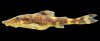 Rhinotocinclus
yaka Rhinotocinclus
yakaFemale, igarapé Açaí near São Pedro Village, Rio Tiquié basin, Amazonas, Brazil |
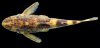 Rhinotocinclus
yaka Rhinotocinclus
yakaDorsal view-Female, igarapé Açaí near São Pedro Village, Rio Tiquié basin, Amazonas, Brazil |
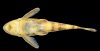 Rhinotocinclus
yaka Rhinotocinclus
yakaVentral view-Female, igarapé Açaí near São Pedro Village, Rio Tiquié basin, Amazonas, Brazil |
If you would like to contribute to the monthly factsheets with an article, information or photos, please e-mail me. You will of course be credited for your work.

If you would like to donate any denomination of monies to the site just click the above link button. All proceeds will go to running the site and hopefully to keep it going for a few years yet.

