SCOTCAT.COM
your internet guide to all things catfish
Rineloricaria harenae Rodrigues da Cruz, Lima Pereira, Oliveira & da Costa Silva, 2026 |
Image contributors to this species: |
ScotCat Sources: |
|
|

Other Sources: |
|

Relevant Information: |
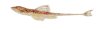
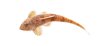
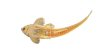
Before being described this species was known as Rineloricaria sp. 3. Costa e Silva et al. 2015 [molecular delimitation]. Abstract: The new species is diagnosed by a distinctive combination of characters: (1) four lateral plate series, with the mid-dorsal series absent; (2) abdomen only partially covered by central plates that do not reach the pectoral-fin insertion; (3) plates of the central abdominal complex arranged in an approximately triangular pattern; (4) cleithral (scapular) region entirely naked or bearing a few small, isolated plates; and (5) presence of five dark transverse bars on the dorsal surface of the body. Mitochondrial COI data corroborate species distinctiveness, and phylogenetic inference under the GTR model recovers R. harenae as a well-supported lineage. The species is currently known only from the type locality, a shallow (< 1 m), sandy reach showing early siltation, suggesting potential vulnerability. Although it exhibits canonical traits of sand-dwelling groups (four lateral plate series, broad naked snout, filamentous upper caudal ray), it differs from sand-dwelling congeners by displaying an abdominal plating pattern typical of rock-dwelling groups, (Rodriques da cruz B. et al 2026). Sexual dimorphism. Mature males with abundant hypertrophied odontodes on the lateral margins of the head. Dorsal region of pectoral-fin rays covered almost entirely with thin, long odontodes with curved tips. Unbranched pectoral-fin ray thick, strongly curved, with short, densely arranged odontodes (Mejia et al 2025). Reproduction: The Rineloricaria species are usually cave spawners, where the female will place their eggs after the male has cleaned inside. The male will then guard and fan the eggs until hatching. The eggs will hatch in 4-5 days whereas the male can now be removed. More breeding information can be found here in the articles breeding section. Aquarium Care: As with all Rineloricaria provide long leaved plants or bamboo stalks for them to hang on to and of course a sandy substrate. Diet: Omnivore. Vegetable food such as cucumber and other various foods such as tablet, flake and frozen. Etymology: The specific name harenae: From harenae, the Latin word for sand, in reference to the sandy substrate characteristic of the habitat where the new species was discovered. Treated as a noun in apposition. Remarks: For the full paper link here |
Common Name: |
None |
Synonyms: |
None |
Family: |
Loricariidae |
Distribution: |
South America: Brazil, Itapocú River, Jaraguá do Sul, Santa Catarina. |
Size: |
10.0cm. (4ins) |
Temp: |
22-25°c (71-77°f) |
p.H. |
|
6.0-7.0. |
IUCN Red List |
Not Evaluated. |
Reference: |
Fish
in the News
2026. |

Family: Loricariidae Back to Ident-A-Cat Click on Thumbnails |
 Rineloricaria
harenae Rineloricaria
harenaeLateral view-holotype-Itapocú, municipitaly of Jaraguá do Sul, Santa Catarina, Brazil |
 Rineloricaria
harenae Rineloricaria
harenaeDorsal view-holotype-Itapocú, municipitaly of Jaraguá do Sul, Santa Catarina, Brazil |
 Rineloricaria
harenae Rineloricaria
harenaeVentral view-holotype-Itapocú, municipitaly of Jaraguá do Sul, Santa Catarina, Brazil |
If you would like to contribute to the monthly factsheets with an article, information or photos, please e-mail me. You will of course be credited for your work.

If you would like to donate any denomination of monies to the site just click the above link button. All proceeds will go to running the site and hopefully to keep it going for a few years yet.

