SCOTCAT.COM
your internet guide to all things catfish
Rineloricaria phoxocephala (Eigenmann & Eigenmann 1889) |
Image contributors to this species: |
Mitsuhiro Iwamoto (3) |
ScotCat Sources: |
|
|

Other Sources: |
|


Relevant Information: |
Habitat: Rinelolricaria phoxocephala (Eigenmann & Eigenmann, 1889), are commonly found in big rivers and floating meadows (pers. obs. – LRP). Reproduction: The Rineloricaria species are usually cave spawners, where the female will place their eggs after the male has cleaned inside. The male will then guard and fan the eggs until hatching. The eggs will hatch in 4-5 days whereas the male can now be removed. More breeding information can be found here in the articles breeding section. Aquarium Care: Not an easy species to keep with excessive demands on good water quality. Prefers water movement in the aquarium. Diet: Omnivore. Vegetable food such as cucumber and other various foods such as tablet, flake and frozen. Etymology: The specific name phoxocephala: phoxos, tapered; cephala, head, referring to its long, pointed head. |
Common Name: |
None |
Synonyms: |
Loricaria phoxocephala, Hemiloricaria phoxocephala |
Family: |
Loricariidae |
Distribution: |
South America: Amazon River basin, Brazil. Type Locality: Coary [Brazil]. |
Size: |
15.0cm. (6ins) |
Temp: |
24-27°c (75-79°f) |
p.H. |
|
6.0-7.5. |
Reference: |
Ferraris, C.J. Jr.,
2007. Checklist of catfishes, recent and fossil (Osteichthyes:
Siluriformes), and catalogue of siluriform primary
types. Zootaxa 1418:1-628. |

Family: Loricariidae Back to Ident-A-Cat Click on Thumbnails |
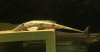 Rineloricaria
phoxocephala Rineloricaria
phoxocephala |
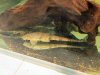 Rineloricaria
phoxocephala Rineloricaria
phoxocephala |
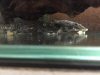 Rineloricaria
phoxocephala Rineloricaria
phoxocephalaHead view |
If you would like to contribute to the monthly factsheets with an article, information or photos, please e-mail me. You will of course be credited for your work.

If you would like to donate any denomination of monies to the site just click the above link button. All proceeds will go to running the site and hopefully to keep it going for a few years yet.

