SCOTCAT.COM
your internet guide to all things catfish
Chiloglanis bifurcus Jubb & Le Roux, 1969 |
Image contributors to this species: |
Russell Brian Tate (1) Rob Palmer (1) |
ScotCat Sources: |
|

Other Sources: |
|
|


Relevant Information: |
Increasing extraction and regulation of river water as well as pollution threaten this species. Habitat: Occurs in rocky rapids and cascades in altitudes of 900-1,200 m. Prefers deeper waters (30-60 cm) over cobbles. Reproduction: Oviparous. Distinct pairing during breeding. Hides eggs in gravel. Breeds during summer and is a partial spawner. Aquarium Care: Good oxygenated water from a power filter. Sand or gravel substrate with smooth rocks or pebbles. Their dorsal and pectoral fins are sharp and can cause wounds if not handled carefully. Sexual Differences: Usually in the form of a different shaped caudal fin. Diet: Feeds on benthic invertebrates such as mayfly and caddis fly nymphs, blackfly and midge larvae and small snails. In the aquarium feed algae foods, fly larvae foods, bloodworm, and flake food. Etymology: The specific name bifurcus: Latin for two-pronged, referring to shape of caudal fin, “forked with large lobes”. Remarks: The distribution range of Chiloglanis bifurcus is entirely within privately owned land without any formal conservation protection. The two remaining subpopulations need to be given priority for conservation efforts as this species is critically endangered (IUCN 2017). |
Common Name: |
Incomati suckermouth |
Synonyms: |
None |
Family: |
Mochokidae |
Distribution: |
Africa: Crocodile-Incomati basin. Type locality: Crocodile River, Incomati River system, Montrose Farm, Nelspruit District, Southern Africa. |
Size: |
7.0cm. (2¾ins) |
Temp: |
23-26°C (73-79°F) |
p.H. |
|
6.5-7.2. |
IUCN Red List |
Incomati Suckermouth (Chiloglanis bifurcus) is endemic to the Upper Crocodile River and Elands River of the Inkomati River System, South Africa (Jubb & Le Roux 1969; Gaigher 1969; Kleynhans 1982, 1984, 1986; Skelton 1987; Kleynhans et al. 1992) and in the Upper Mlumati River in Swaziland (Monadjem et al. 2003, Bills et al. 2004). The population has declined since 1984 with the construction of the Kwena Dam (formerly Braam Raubenheimer Dam) in the Crocodile River for irrigation purposes. Flow regulation is particularly relevant in this regard and is thought to be the main driver of the elimination of the subpopulation in the Crocodile River below this dam. The chemical spill from the SAPPI Paper Mill at Ngodwana (23 September 1989) into the Elands River, further accelerated the decline of this species. More recently, deteriorating water quality from Machadodorp has impacted on this species. These declines have been exacerbated by the introduction of invasive alien fish species (Roux and Selepe 2013). These declines have been observed, through continuous biomonitoring of the species and the determination of the Ecostatus of the Inkomati Catchment by nature conservation officials (MTPA – Mpumalanga Tourism and Parks Agency). Based on the trends of the catch per unit effort (CPUE) and relative abundance of this species a 90% population reduction has been observed over the past 10 years (estimated generation length of 3-5 years) (Kleynhans 1984, 1989; Roux & Selepe 2013; Roux et al. 2016). There has also been a decline in the area of occupancy (AOO), extent of occurrence (EOO) and a loss of habitat quality. It therefore qualifies as Critically Endangered under criteria A2ace (IUCN 2017). |
Reference: |
Ferraris, C.J. Jr.,
2007. Checklist of catfishes, recent and fossil (Osteichthyes:
Siluriformes), and catalogue of siluriform primary
types. Zootaxa 1418:1-628. |

Family: Mochokidae Back to Ident-A-Cat Click on Thumbnails |
 Chiloglanis
bifurcus |
 Chiloglanis
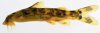
bifurcus Ehlanzeni, ZA-MP, ZA |
If you would like to contribute to the monthly factsheets with an article, information or photos, please e-mail me. You will of course be credited for your work.

If you would like to donate any denomination of monies to the site just click the above link button. All proceeds will go to running the site and hopefully to keep it going for a few years yet.

