SCOTCAT.COM
your internet guide to all things catfish
Chiloglanis brevispina Mutizwa, Bragança & Chakona, 2026 |
Image contributors to this species: |
ScotCat Sources: |
|

Other Sources: |
|
|

Relevant Information: |
Researchers examined specimens collected from several locations throughout the Zambezi River system. Earlier field observations had revealed considerable differences in body shape, skin texture, and colour patterns among fishes previously identified as Chiloglanis neumanni. The new study confirms that several of these populations represent separate species. This species occurs in the upper Zambezi River system, including rocky rapids near Sioma Falls and areas upstream of Victoria Falls. It is distinguished by relatively short dorsal- and pectoral-fin spines. Its skin also bears prominent cone-shaped projections, providing additional characteristics for identification. Unlike the other three species, Chiloglanis brevispina was described primarily from morphological evidence because suitable genetic material was unavailable during the study (Mutizwa TI et al.). Aquarium Care: Good oxygenated water from a power filter. Sand or gravel substrate with smooth rocks or pebbles. Their dorsal and pectoral fins are sharp and can cause wounds if not handled carefully. Sexual Differences: Usually in the form of a different shaped caudal fin. Diet: Mouth and dentition suggest that it is a bottom feeder and algal grazer. In the aquarium feed algae, fly larvae foods, bloodworm, and flake food. Etymology: The name is a combination of Latin words brevis, meaning short, and spina, meaning spine. This refers to the species having shorter dorsal and pectoral-fin spines among its Southern African congeners. |
Common Name: |
Chiloglanis sp. ‘southern rapids’ |
Synonyms: |
None |
Family: |
Mochokidae |
Distribution: |
Africa: Upper Zambezi River system. Type locality: Upper Zambezi River, Zambezi River system, Zambia, 16° 39' 29" S, 23° 34' 19" E. |
Size: |
4.0cm. (1½ins) |
Temp: |
23-26°C (73-79°F) |
p.H. |
|
6.5-7.2. |
IUCN Red List |
Not Evaluated. |
Reference: |
Fish
in the News: 2026. |

Family: Mochokidae Back to Ident-A-Cat Click on Thumbnails |
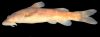 Chiloglanis
brevispina Holotype-female |
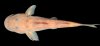 Chiloglanis
brevispina Holotype-female-dorsal view |
 Chiloglanis
brevispina Holotype-female-ventral view |
If you would like to contribute to the monthly factsheets with an article, information or photos, please e-mail me. You will of course be credited for your work.

If you would like to donate any denomination of monies to the site just click the above link button. All proceeds will go to running the site and hopefully to keep it going for a few years yet.

