SCOTCAT.COM
your internet guide to all things catfish
Helicophagus leptorhynchus Ng & Kottelat, 2000 |
Image contributors to this species: |
Fishes of Mainland Southeast Asia (2) Jean-Francois Helias (2) |
ScotCat Sources: |
|
|

Other Sources: |
|


Relevant Information: |
This species was recognised as Helicophagus waandersii (from Indonesian Sumatra) for a long time, and was described as valid species by Ng and Kottelat (2000). Description: Dorsal spines (total): 1; Dorsal soft rays (total): 6-7; Anal soft rays: 35 - 42; Vertebrae: 46 - 48. Can be differentiated from all its congeners by the following combination of characters: length of anal-fin base 34.5-38.2% SL, length of caudal peduncle 12.9-15.3% SL, head length 20.8-22.8% SL, eye diameter 16.1-21.2% HL, 9-12 gill rakers on the first branchial arch. Snout relatively elongate, conical in dorsal view; mouth narrow, with 20-25 times in SL; posterior nostril midway between anterior nostril and eye. Habitat: Found in permanent mainstream rivers and larger tributaries, and does not move into flooded forests or wetlands; it migrates upstream at the start of the rains, and returns downstream as waters recede (Rainboth 1996). Reported to use deep pool habitats within the Mekong mainstream (Poulsen et al. 2002). It is considered to be a short to moderately-long distance migrant. Diet: The species feeds on molluscs. Etymology: The specific name leptorhynchus: From the Greek leptos (slender) and rhynchos (snout), in reference to the relatively slender snout of this species. |
Common Name: |
None |
Synonyms: |
None |
Family: |
Pangasiidae |
Distribution: |
Asia: Chao Phraya and Mekong River drainages in Indochina. Type locality: Mun River at Bung Wai, about 7 kilometers west of Ubon Ratchathani, 15°12'30''N, 104°47'30''E, Ubon Ratchathani Province, Thailand. |
Size: |
47.0cm. (18¾ins) |
Temp: |
22-28°C (71-83°F) |
p.H. |
|
6.5-7.5. |
IUCN Red List |
The species is widespread in the Chao Phraya and the middle and lower Mekong basins in southeast Asia. Populations in parts of its range (Chao Phraya) have shown no sign of significant decline at present, although it is vulnerable to pollution. Although the species may be less vulnerable than some other species to mainstream dam impacts, it is considered Data Deficient at present, and further information on the timing and impact of dam developments is required, and populations and habitats should be monitored, but needs updating (IUCN 2012). |
Reference: |
Froese, R. and D. Pauly.
Editors. 2006. FishBase. World Wide Web electronic
publication. www.fishbase.org, version (08/2016). |

Family: Pangasiidae Back to Ident-A-Cat Click on Thumbnails |
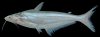 Helicophagus leptorhynchus
 |
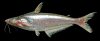 Helicophagus
leptorhynchus Helicophagus
leptorhynchus |
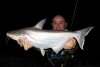 Helicophagus leptorhynchus
 |
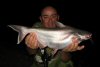 Helicophagus
leptorhynchus Helicophagus
leptorhynchus |
If you would like to contribute to the monthly factsheets with an article, information or photos, please e-mail me. You will of course be credited for your work.

If you would like to donate any denomination of monies to the site just click the above link button. All proceeds will go to running the site and hopefully to keep it going for a few years yet.

