SCOTCAT.COM
your internet guide to all things catfish
Pangasius macronema Bleeker, 1851 |
Image contributors to this species: |
Jean-Francois Helias (2) Johnny Jensen's Photographic Library (1) Fishes of Mainland Southeast Asia (1) Cheilinus Aquarium Photography (1) |
ScotCat Sources: |
|
|

Other Sources: |
|


Relevant Information: |
Description: Dorsal spines (total): 1; Dorsal soft rays (total): 7 - 7; Anal soft rays: 30 - 38. Relatively deep body; lacks mid-lateral and abdominal stripes; lacks black spot at dorsal-fin origin; teeth on roof of mouth in 4 separate patches (2 vomerine and 3 palatine patches); maxillary barbel reaches tip of pectoral fin. Habitat: Spends the dry season in deep pool refuge habitats in the Mekong mainstream, and possibly some of the larger tributaries. Three populations of this species exist, the first in Thakhek, Khammouan province of the Lao PDR to Chiang Saen, in Chiang Rai province of Thailand. Second in Khemmaratch, Ubon Ratchathani province of Thailand in the north, down to Kratie province in Cambodia. The third population overlaps the second and is distributed from Stung Treng in Cambodia, down to the Bassac River in Can Tho province and to the Mekong Delta. Reproduction: spawns in large schools in the Mekong mainstream during the flood season, possibly later than most other pangasiid species. Both juveniles and adults enter floodplain habitats to feed. At the beginning of the dry season, they move back to the river channels and migrate towards their dry-season habitats associated with deep pools. Diet: larvae and juveniles feed in floodplain habitats, e.g. in Southern Cambodia and Viet Nam. Adults feed mainly in large rivers near the surface, often relying on vision to capture their prey, which include dragonflies. Etymology: The specific name macronema: macro-, from makrós, long or large; nêma, thread or yarn, referring to its long barbels, longer than head. |
Common Name: |
None |
Synonyms: |
Pangasius siamensis |
Family: |
Pangasiidae |
Distribution: |
Asia: Mekong and Chao Phraya River basins, Java, and Borneo. Type locality: Banjermassing, in fluviis. |
Size: |
30.0cm. (12ins) |
Temp: |
22-28°C (71-83°F) |
p.H. |
|
6.5-7.5. |
IUCN Red List |
This species is known from the Mekong, Chao Phraya and Hue river drainages in mainland Southeast Asia, and the Barito River drainage in Borneo. Although there is no detailed information on the population size and trend of this species, it is still abundant throughout its known distribution. While there may be localised or regional threats, they are unlikely to affect this species on a range-wide scale, and it is found within several protected areas. Therefore, it is assessed as Least Concern (IUCN 2020). |
Reference: |
Ferraris, C.J. Jr.,
2007. Checklist of catfishes, recent and fossil (Osteichthyes:
Siluriformes), and catalogue of siluriform primary
types. Zootaxa 1418:1-628. |

Family: Pangasiidae Back to Ident-A-Cat Click on Thumbnails |
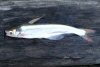 Pangasius macronema
Juvenile-Nung River near Vientiane, Laos |
 Pangasius
macronema Pangasius
macronemaJuvenile, head view-Nung River near Vientiane, Laos |
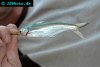 Pangasius
macronema Pangasius
macronemaJuvenile |
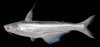 Pangasius
macronema Pangasius
macronemaChao Phraya River, Bangkok, Thailand |
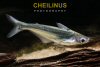 Pangasius
macronema Pangasius
macronema |
If you would like to contribute to the monthly factsheets with an article, information or photos, please e-mail me. You will of course be credited for your work.

If you would like to donate any denomination of monies to the site just click the above link button. All proceeds will go to running the site and hopefully to keep it going for a few years yet.

