SCOTCAT.COM
your internet guide to all things catfish
Calophysus macropterus (Lichtenstein, 1819) |
Image contributors to this species: |
Robin Warne (1) Frants Lehmann (1 Stamp) Wolfgang Ros (6) Enrico Richter (1) David Marshall (2) |
ScotCat Sources: |
|
|


Other Sources: |
|


Relevant Information: |
Is reported to commonly attack the fishes caught in fishermen's nets and seines as well as those hooked on trotlines or gaffed. Aquarium Care: An out and out predator so should only be kept with larger species such as South American cichlids, Oscars etc. and the larger L-number armoured Loricariids. I must admit that in the "Large Catfish" world this is probably one of the nicest looking and comparatively easy to keep species if you are a big cat enthusiast, and if you are able to give it a large tank (min 6ft x 3ft x 2ft) to cruise around in. Diet: Shrimps, fish fillets and live foods such as Earthworms. Will gladly take tablet, pellet foods and foodsticks. Etymology: The specific name macropterus: Large wing, (referring to the fins). |
Common Name: |
Vulture Catfish |
Synonyms: |
Pimelodes macropterus, Pimelodus ctenodus, Pimeletropsis lateralis. |
Family: |
Pimelodidae |
Distribution: |
South America: Amazon and Orinoco River basins. |
Size: |
50.0cm. (20ins) |
Temp: |
22-26°C (71-79°F) |
p.H. |
|
6.5-7.2. |
IUCN Red List |
Despite the little information available on this species, it has a wide range and no apparent threats. Therefore, it is assessed as Least Concern (IUCN 2023). |
Reference: |
Grant, Steven.
Pims. Pimelodidae, Heptapteridae
and Pseudopimelodidae Catfishes. ATS-Aquashop.de 2021
219p. |

Family: Pimelodidae Back to Ident-A-Cat Click on Thumbnails |
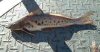 Calophysus macropterus
 |
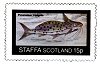 Calophysus
macropterus Calophysus
macropterusStamp |
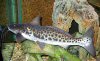 Calophysus
macropterus Calophysus
macropterus |
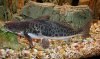 Calophysus
macropterus Calophysus
macropterus |
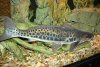 Calophysus
macropterus Calophysus
macropterus |
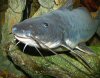 Calophysus
macropterus Calophysus
macropterusShowing the business end! |
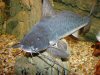 Calophysus
macropterus Calophysus
macropterus |
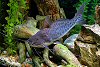 Calophysus
macropterus Calophysus
macropterus |
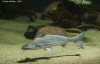 Calophysus
macropterus Calophysus
macropterus |
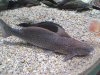 Calophysus
macropterus Calophysus
macropterusImage taken at the Oceanarium, Bournemouth, England U.K. |
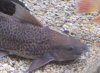 Calophysus
macropterus Calophysus
macropterusHead view-image taken at the Oceanarium, Bournemouth, England U.K. |
If you would like to contribute to the monthly factsheets with an article, information or photos, please e-mail me. You will of course be credited for your work.

If you would like to donate any denomination of monies to the site just click the above link button. All proceeds will go to running the site and hopefully to keep it going for a few years yet.

