SCOTCAT.COM
your internet guide to all things catfish
Hemisorubim platyrhynchos (Valenciennes, 1840) |
Image contributors to this species: |
Robin Warne (1) Johnny Jensen's Photographic Library (3) Enrico Richter (1) Erlend D Bertelsen (1) |
ScotCat Sources: |
|
|

Other Sources: |
|


Relevant Information: |
Description: Head strongly depressed and the jaw prominently inferior. Dorsal 1-6 rays, Pectoral 1-7; Pelvics 6; Anal fin; 9. Maxillary barbells reach back to the adipose fin. The occipital process is united to the nucal plate, and the humeral process is small. Habitat: Rather rare, and is confined to the deeper and slow-moving parts of large rivers together with some Loricaria and Potamotrygon. Its body shape and colour pattern are perfectly adapted to the muddy bottom where they stay. Colouration: Adults have a greyish colouration, with a series of brown spots of which those on the flanks have a black center. Juveniles are heavier spotted than the adults. Diet: Feeds on benthic organisms and fish. The position of the eyes and the shape of the mouth of this piscivorous fish give to its stalking mode of hunting. Etymology: The specific name platyrhynchos: platýs, flat; rhýnchos, snout, referring to its strongly depressed head, said to resemble a duckbill. |
Common Name: |
Spotted Shovelnose Catfish, Porthole Shovelnose Catfish |
Synonyms: |
Platystoma platyrhynchos, Silurus gerupoca |
Family: |
Pimelodidae |
Distribution: |
South America: Amazon, Maroni, Orinoco, Paraná River basins. |
Size: |
50.0cm. (20ins) |
Temp: |
20-22°C (68-72°F) |
p.H. |
|
6.0-7.5. |
IUCN Red List |
Despite the little information available on this species, it has a wide range and no apparent threats. Therefore, it is assessed as Least Concern (LC), (IUCN 2023). |
Reference: |
Conservación
Internacional; seris de Guías Tropicales
De Campo. Pecos del medio Amazonas Región de
Leticia. 546 p. |

Family: Pimelodidae Back to Ident-A-Cat Click on Thumbnails |
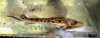 Hemisorubim platyrhynchos
Juvenile |
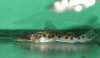 Hemisorubim
platyrhynchos Hemisorubim
platyrhynchos |
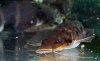 Hemisorubim
platyrhynchos Hemisorubim
platyrhynchosHead View |
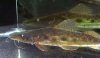 Hemisorubim
platyrhynchos Hemisorubim
platyrhynchos |
 Hemisorubim
platyrhynchos Hemisorubim
platyrhynchos |
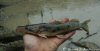 Hemisorubim platyrhynchos
Rio Tapiche, Peru |
If you would like to contribute to the monthly factsheets with an article, information or photos, please e-mail me. You will of course be credited for your work.

If you would like to donate any denomination of monies to the site just click the above link button. All proceeds will go to running the site and hopefully to keep it going for a few years yet.

