SCOTCAT.COM
your internet guide to all things catfish
Leiarius perruno (Schultz 1944) |
Image contributors to this species: |
Chris Ralph (1) Sandra J. Raredon (3) |
ScotCat Sources: |
|
|


Other Sources: |
|


Relevant Information: |
Whilst these are magnificent fish to observe they are not ideally suited to life in captivity, unless being looked after in a large Public Aquarium. It is suggested that the scientific name is derived from the local name of ‘bagre perruno’ by the local people of the Maracaibo basin (bagre is the South American name for a catfish). I have kept a number of these catfish over the years (Chris Ralph-factsheet no.166) and have noted that they can fast for periods of time which can be slightly worrying when this happens, and tends to coincide after having a particularly heavy meal. The longest fast lasted 4 weeks. Description: The fact that this catfish has distinctive markings and very long maxillary barbels make it easily identifiable. Leiarius perruno is sometimes confused with Leiarius pictus (Sailfin pimelodid) and Leiarius marmoratus (Marble antenna catfish). Diet: Leiarius perruno is a predatory fish in its natural habitat, feeding upon any unsuspecting fish which happen to get in the way of its relatively large cavernous mouth. Etymology: The specific name perruno: Local name for this catfish in the Lake Maracaibo region of Venezuela. Remarks: Still named in some online sources as Perrunichthys perruno but it is now valid as a synoynm of L. perruno. |
Common Name: |
Leopard catfish |
Synonyms: |
Perrunichthys perruno |
Family: |
Pimelodidae |
Distribution: |
South America: Venezuela and Colombia from the Rio Negro system. Type locality: Rio Negro below the mouth of the Rio Yasa, 75km south of Rosario on the west side of Lake Maracaibo, Venezuela. |
Size: |
60.0cm. (24ins) |
Temp: |
22-26°C (72-79°F) |
p.H. |
|
6.0-7.2. |
IUCN Red List |
Not Evaluated |
Reference: |
Lundberg, J. G., J.
P. Sullivan and M. Hardman 2011 (Oct.). Phylogenetics
of the South American catfish family Pimelodidae (Teleostei:
Siluriformes) using nuclear and mitochondrial gene
sequences. Proceedings of the Academy of Natural Sciences
of Philadelphia v. 161: 153-189. |

Family: Pimelodidae Back to Ident-A-Cat Click on Thumbnails |
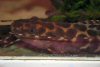 Leiarius perruno
 |
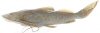 Leiarius perruno
Holotype |
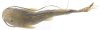 Leiarius
perruno Leiarius
perrunoHolotype-dorsal view |
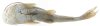 Leiarius
perruno Leiarius
perrunoHolotype-ventral view |
If you would like to contribute to the monthly factsheets with an article, information or photos, please e-mail me. You will of course be credited for your work.

If you would like to donate any denomination of monies to the site just click the above link button. All proceeds will go to running the site and hopefully to keep it going for a few years yet.

