SCOTCAT.COM
your internet guide to all things catfish
Ceratoglanis pachynema Ng, 1999 |
Image contributors to this species: |
Nonn Panitvong (1) Kiruya Momochi (1) |
ScotCat Sources: |
|
|

Other Sources: |
|


Relevant Information: |
Reported to be quite rare in Thailand due to lost habitats and over fishing. This species was previously misidentified as Ceratoglanis scleronema from the Chao Phraya drainage. Description: Dorsal spines (total): 0; Dorsal soft rays (total): 0 - 0; Anal soft rays: 90 - 101; Vertebrae: 63 - 64. Snout with a gently sloping ventral profile (ventral angle of snout 40°-42°), relatively fewer anal-fin rays (90-101), and larger eyes (eye diameter 13.0-16.4% HL) set closer together (interorbital distance 33.7-36.6% HL). Absence of dorsal fin; short stiff hooked maxillary barbels; posterior nostril above front margin eye. Habitat: Inhabits mainstream river. Sexual Differences: Mature males have membranous extensions on both the anterior and posterior edges of the maxillary barbel. Pectoral spine and articulated segments sexually dimorphic in mature individuals. Males with spine broad and somewhat flattened dorsoventrally, with 10 distinct posterior serrate, increasing in size distally; proximal articulated segments with 17 well-developed posterior serrae; distal-most segments have smaller serrae. Females or juveniles with spine slender and without serrae; proximal articulated segments with 6 minute posterior serrae; distal segments with 5 minute serrae. Diet: Carnivorous, feeding on insects and benthic fauna. Etymology: The specific name pachynema comes from the thicker barbels of this species compared to its only congener, C. scleronema. Remarks: Not an aquarium fish as they are reported to be very hard to keep and will die soon after capture, as they are a deep water living fish in their natural habitat. |
Common Name: |
Club-barbel sheatfish |
Synonyms: |
None |
Family: |
Siluridae |
Distribution: |
Asia: Chao Phraya and Mekong River basins. Type locality: Prachinburi Market, Thailand. |
Size: |
28.0cm. (11ins) |
Temp: |
22-26°C (71-79°F) |
p.H. |
|
6.0-7.0. |
IUCN Red List |
This species is known only from the lower Bang Pakong River drainage area in south-central Thailand, where large levels of pollution from industrial, domestic and agricultural sources is causing decreasing water quality. The actual population decline is unknown, however based on the major pollution that has occurred since 2005, the sensitivity of this species, and current very low population levels it is suspected that the population has declined by more than 80% over the past 10 years. Further surveys are required to confirm the species' full distribution and population trends; if it is shown to have a wider distribution than is currently known, the species should be reassessed. At the moment (2026) this species is assessed as Critically Endangered, and needs to be updated, (IUCN 2011). |
Reference: |
Froese, R. and D. Pauly.
Editors. 2009. FishBase. World Wide Web electronic
publication. www.fishbase.org, version (08/2010). |

Family: Siluridae Back to Ident-A-Cat Click on Thumbnails |
 Ceratoglanis
pachynema |
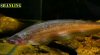 Ceratoglanis
pachynema |
If you would like to contribute to the monthly factsheets with an article, information or photos, please e-mail me. You will of course be credited for your work.

If you would like to donate any denomination of monies to the site just click the above link button. All proceeds will go to running the site and hopefully to keep it going for a few years yet.

