SCOTCAT.COM
your internet guide to all things catfish
Gagata itchkeea (Sykes, 1839) |
Image contributors to this species: |
Adrian Taylor (2) |
ScotCat Sources: |
|

Other Sources: |
|


Relevant Information: |
Description: Dorsal spines (total): 1; Dorsal soft rays (total): 6; Vertebrae: 34 - 35. Apparently a small species with a deep body, approximately equal to head length. Eye very large, greater than snout length. Snout blunt; mesethmoid greatly enlarged, more strongly projecting ventrally when compared with congeners. Tympanum large, its width equal to eye diameter. Swim bladder chamber with a greatly expanded dorsal bony roof but no ventral bony enclosure. Jaws with well-developed conical teeth in several irregular rows. Cranial roofing bones more superficial than in any other Nangrina, and covered with thin skin; cranial surface rugose. Posterior cranial fontanel very small, less than 1/3 length of anterior fontanel; lateral fontanels absent; subtemporal fossa absent. Anal fin with 4-5 simple rays, 8-10 branched rays. Aquarium Care: This is a peaceful species which would be better kept in a group of about 6 specimens with plenty of swimming space. Provide good filtration and aeration. Provide a sand substrate with plants as an option. Diet: Live, frozen and tablet foods. Etymology: The specific name itchkeea: Marathi vernacular for this species in India, which, as Sykes explained in 1841, he adopted “so that naturalists who travel the country can always obtain” the species. |
Common Name: |
None |
Synonyms: |
Phractocephalus itchkeea, Arius pumilus |
Family: |
Sisoridae |
Distribution: |
Asia: Narmada, Krishna and Cauvery River basins, India. Type locality: Deccan, India. |
Size: |
7.0cm. (2¾ins) |
Temp: |
23-26°c (73-79°f.) |
p.H. |
|
6.5-7.2. |
IUCN Red List |
Gagata itchkeea has been assessed as Vulnerable as it is a habitat specialist with and estimated area of occupancy (AOO) between 1,000 and 1,200 km². The species is found in only 7-10 fragmented locations and its habitat is declining because of the anthrapogenic activities such as deforestation and recreational activities leading to siltation and pollution of the rivers. Also, fishing can also be a threat to the species as the species is often present as large shoals and hence more vulnerable to large catches, and needs updating, (IUCN 2020). |
Reference: |
|
Baensch, H.A. and R.
Riehl, 1991. Aquarien atlas. Bd. 3. Melle:
Mergus, Verlag für Natur-und Heimtierkunde, Germany.
1104 p. |

Family: Sisoridae Back to Ident-A-Cat Click on Thumbnails |
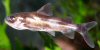 Gagata
itchkeea |
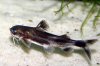 Gagata
itchkeea |
If you would like to contribute to the monthly factsheets with an article, information or photos, please e-mail me. You will of course be credited for your work.

If you would like to donate any denomination of monies to the site just click the above link button. All proceeds will go to running the site and hopefully to keep it going for a few years yet.

