SCOTCAT.COM
your internet guide to all things catfish
Gagata melanopterus Roberts & Ferraris, 1998 |
Image contributors to this species: |
Kamphol Udomritthiruj (1) |
ScotCat Sources: |
|

Other Sources: |
|


Relevant Information: |
Description: Dorsal spines (total): 1; Dorsal soft rays (total): 6; Vertebrae: 39 - 41. Dorsal spine tip not reaching to adipose-fin origin when adpressed. Premaxilla with 2 rows of teeth. Adpressed anal fin fails to reach first lower procurrent caudal-fin rays. Mouth near snout tip; oral opening transverse, entirely ventral to nares; free lips absent. Anal fin with 4-6 simple rays, 10-12 branched rays. Differs from G. gagata in having its dorsal spine not reaching adipose-fin origin (versus reaching and even extending beyond adipose origin when dorsal-spine is depressed); smaller pelvic fin not reaching anal-fin origin (versus reaching anal-fin origin); last anal-fin ray not reaching first lower procurrent caudal-fin rays (versus extending posteriorly to origin of lower procurrent caudal-fin rays); complete bony encapsulation of the swim bladder (versus incomplete); and 2 rows of teeth on the premaxilla (versus 4 rows). Colouration: Body silvery, either without marking or with faint saddles. Fins, except caudal fin, blackened at least distally. Aquarium Care: This is a peaceful species which would be better kept in a group of about 6 specimens with plenty of swimming space. Provide good filtration and aeration. Provide a sand substrate with plants as an option. Diet: Live, frozen and tablet foods. Remarks: Although there is little information on the global population and its trend for this species, it is still a relatively common species in Myanmar. There are also no perceptible threats currently, although more research is needed in this area. Therefore Gagata melanopterus is assessed as Least Concern at the present (IUCN 2010). |
Common Name: |
None |
Synonyms: |
None |
Family: |
Sisoridae |
Distribution: |
Asia: Irrawaddy, Rangoon, Sittang and lower Salween River basins, Myanmar. Type locality: Myanmar: Yangon Division, Hlaing River |
Size: |
15.5cm. (6¼ins) |
Temp: |
23-26°c (73-79°f.) |
p.H. |
|
6.5-7.2. |
Reference: |
Ferraris, C.J. Jr.,
2007. Checklist of catfishes, recent and fossil (Osteichthyes:
Siluriformes), and catalogue of siluriform primary
types. Zootaxa 1418:1-628. |

Family: Sisoridae Back to Ident-A-Cat Click on Thumbnails |
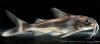 Gagata
melanopterus Gagata
melanopterus |
If you would like to contribute to the monthly factsheets with an article, information or photos, please e-mail me. You will of course be credited for your work.

If you would like to donate any denomination of monies to the site just click the above link button. All proceeds will go to running the site and hopefully to keep it going for a few years yet.

