SCOTCAT.COM
your internet guide to all things catfish
Glyptothorax malabarensis Gopi, 2010 |
Image contributors to this species: |
Beta Mahatvaraj (1) Abhisek Mishra (2) |
ScotCat Sources: |
|

Other Sources: |
|


Relevant Information: |
Description: This species is distinguished from its congeners in peninsular India by the following set of characters: body depth at dorsal-fin origin, 19.6-19.9% SL; caudal-peduncle length 14.3-14.7% SL, depth 12.4-12.7 % SL, 86.4-88.1% its length; thoracic adhesive apparatus approximately pentagonal, as long as broad, with no median depression; skin of head and body minutely granulated. It differs from G. anamalaiensis, which most closely resembles it in the Indian peninsula, by its body depth (vs. 12.9-16.8% SL), deeper caudal peduncle (vs. 34.1-37.8% its length), longer nasal barbels reaching the anterior margin of the orbit (vs. reaching only half the distance to the orbit), and the thoracic adhesive apparatus (vs. adhesive apparatus broader than long, inverted V-shaped with short unculiferous ridges). Habitat: Specimens were collected from submerged crevices formed by large boulders in an upland stream (210 m a.s.l.), which is about 6 m wide and 0.5-1.5 m deep, flowing through a forest patch on the western slopes of the Western Ghats in Kerala. The streambed in this area is composed of pebble and sand in which are embedded large boulders. Collection was done in February, a relatively dry month, and the stream was in a depleted phase with clear- but not fast flowing-water. Riparian forest vegetation in the vicinity of the stream provided ample shade. Associated fishes from the collection site included Barilius bakeri Day, Garra mullya (Sykes) (Cyprinidae); Bhavania australis (Jerdon) and Schistura denisoni denisoni (Day) (Balitoridae), from the pebble-bottomed area of the stream. Colouration: Colour when alive consists of a black background with 3 flesh-red or orange transverse bands on the body and when preserved, changing to dark-grey with black mottling and 3 whitish transverse bands. Etymology: The specific name: malabarensis: Named for the older name for the region of northern Kerala, (‘Malabar’) in which this species occurs. |
Common Name: |
None |
Synonyms: |
None |
Family: |
Sisoridae |
Distribution: |
Asia: India. Type Locality: Pottichapara, 11°58'12.4''N, 75°49'38.7''E, Aralam Wildlife Sanctuary, Urutty Stream, Valapattanam River drainage, Kannur District, Western Gnats, Kerala, India. |
Size: |
5.5cm. (2¼ins) |
Temp: |
18-24°c (63-75°f.) |
p.H. |
|
6.0-7.0. |
IUCN Red List |
There is a need to confirm taxonomic validity of Glyptothorax malabarensis. It is recently described with little information on the range and ecology. The species is remarkably similar to G. anamalaiensis described by Silas (1951). Even though Gopi (2010) has separated Glyptothorax malabarensis from G. anamalaiensis based on a combination of characters, description of G. malabarensis is based on only three specimens and the observed differences may be population variations rather than species variations. Therefore the species is assessed as Data Deficient, but does need updating, (IUCN 2011). |
Reference: |
Dahanukar, N.
2011. Glyptothorax malabarensis. The IUCN
Red List of Threatened Species 2011. |

Family: Sisoridae Back to Ident-A-Cat Click on Thumbnails |
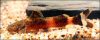 Glyptothorax
malabarensis Glyptothorax
malabarensis |
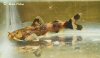 Glyptothorax
malabarensis Glyptothorax
malabarensis |
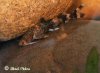 Glyptothorax
malabarensis Glyptothorax
malabarensis |
If you would like to contribute to the monthly factsheets with an article, information or photos, please e-mail me. You will of course be credited for your work.

If you would like to donate any denomination of monies to the site just click the above link button. All proceeds will go to running the site and hopefully to keep it going for a few years yet.

