SCOTCAT.COM
your internet guide to all things catfish
Eremoglanis punctulatus (Valenciennes, 1846) |
Image contributors to this species: |
Erling Holm (1) Jairo Godoy Paredes (1) |
ScotCat Sources: |
|
|

Other Sources: |
|


Relevant Information: |
It is fished and plays an important role in the local cuisine in northern Peru, where this species is known as life, pronounced "lee-fey", or life monsefuano (dishes: panquitas de life or sudado de life). Although it can be difficult to ascertain the exact species depicted in the artwork of the ancient Moche culture, it was likely T. (Eremoglanis) punctulatus that was important in their mythology where perhaps recognised as a connection between light and darkness. In excavations of Huaca de la Luna, more than one-quarter of all fish bones were this species, revealing that it already played an important role as a food to the Moche. Habitat: Endemic to western Peru, ranging at least from Lambayeque and Cajamarca to Tacna. It mostly lives in rivers and streams, but can also be found in habitats such as small lakes and paddy fields. Diet: It is an opportunistic predator that mainly feeds on insects, but also will take small crustaceans and plant material (algae and remains of phanerogams). Etymology: The genus name Eremoglanis: eremo, from eremía, desert, referring to coastal Pacific river basins crossing deserts of central Peru, where it occurs; glánis, ancient name for a silurid catfish (probably Silurus aristotelis) dating to Aristotle, often used as a general term for catfish. The specific name punctulatus: Diminutive of punctum (L.), spot, i.e., having tiny spots, presumably referring to “numerous brown spots advancing on the tail and even on the back” (translation). Remarks: Still found on some online searches as Trichomycterus punctulatus. |
Common Name: |
Blackspotted Pencil Catfish |
Synonyms: |
Trichomycterus punctulatum, Trichomycterus punctulatus. |
Family: |
Trichomycteridae |
Distribution: |
South America: Western Peru. Type locality: la rivière de Lima, Peru. |
Size: |
15.0cm. (6ins) |
Temp: |
25-28°c (77-83°f.) |
p.H. |
|
6.0-7.0. |
IUCN Red List |
There is little information on the biological aspects of this species, however due to the wide distribution of this species, in the rivers of the western margin of the Peruvian Andes, the species is assessed as Least Concern (LC), (IUCN 2024). |
Reference: |
Bourget, S.
(2016). Sacrifice, Violence, and Ideology Among the
Moche: The Rise of Social Complexity in Ancient Peru. |

Family: Trichomycteridae Back to Ident-A-Cat Click on Thumbnails |
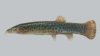 Eremoglanis
punctulatus
Eremoglanis
punctulatusJequetepeque River, Peru |
 Eremoglanis
punctulatus Eremoglanis
punctulatusChiclayo, Peru |
If you would like to contribute to the monthly factsheets with an article, information or photos, please e-mail me. You will of course be credited for your work.

If you would like to donate any denomination of monies to the site just click the above link button. All proceeds will go to running the site and hopefully to keep it going for a few years yet.

