SCOTCAT.COM
your internet guide to all things catfish
Paravandellia phaneronema (Miles, 1943) |
Image contributors to this species: |
Nathan Lujan (1) |
ScotCat Sources: |
|
|

Other Sources: |
|


Relevant Information: |
Habitat: This species is endemic to the Upper Cauca basin, Colombia, where it has been found in Caldas (La Miel River, Norcasia), Quindío (La Vieja River), Tolima (mouth of the Amoyá River in the Saldaña River basin), and Valle del Cauca (Quebrada San Pablo) (Maldonado-Ocampo et al. 2005). In the Santander Department, it is known from the Lebrija and Suárez rivers (Castellanos Morales et al. 2011). Its type locality is Río Cauca, Upper Cauca Valley (Miles 1943). Paravandellia phaneronema (Miles, 1943) is an endemic fish parasite from the basins of the Magdalen and Cauca rivers and is the only species of the genus in Colombia (DoNascimiento, et al., 2017). Diet: As is usual with temporary hematophagous parasites of large fish species, P. phaneronema is often found with its intestines full of blood in the gills of the streaky catfish (Pseudoplatystoma magdaleniatum) (Buitrago, et al., 2007), hence its common name in English: “lancet, bloodsucker” or “son of streaky catfish”. Etymology: The genus name Paravandellia: pará, near, i.e., considered intermediate between Stegophilus and Vandellia (yet described as having the general appearance of the former). The specific name: phaneronema: phanerós, visible; nêma, thread, referring to larger and therefore more visible lower maxillary barbels compared with Branchioica bertoni (=P. oxyptera). Remarks: Although both of these nominal species were described twice in 1943, the text of Miles (1943b) indicates that the names were first made available in Miles (1943a). Román-Valencia (1998) treated Branchioica magdalenae as a junior synonym of Paravandellia phaneronema, thereby acting as first reviser. |
Common Name: |
Lancet bloodsucker |
Synonyms: |
Branchioica phaneronema, Branchioica magdalenae |
Family: |
Trichomycteridae |
Distribution: |
South America: Magdalena and Cauca River basins, Colombia. Type locality: Río Magdalena, Colombia and various points in the Upper Cauca valley. |
Size: |
3.0cm. (1¼ins) |
Temp: |
25-28°c (77-83°f.) |
p.H. |
|
6.0-7.0. |
IUCN Red List |
This species is listed as Least Concern because it is relatively widely distributed and there are no major widespread threats currently affecting its population, but needs updating, (IUCN 2016). |
Reference: |
Burgess, W.E.,
1989. An atlas of freshwater and marine catfishes.
A preliminary survey of the Siluriformes. T.F.H. Publications,
Inc., Neptune City, New Jersey (USA). 784 p. |

Family: Trichomycteridae Back to Ident-A-Cat Click on Thumbnails |
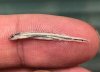 Paravandellia phaneronema
 |
If you would like to contribute to the monthly factsheets with an article, information or photos, please e-mail me. You will of course be credited for your work.

If you would like to donate any denomination of monies to the site just click the above link button. All proceeds will go to running the site and hopefully to keep it going for a few years yet.

