SCOTCAT.COM
your internet guide to all things catfish
Trichomycterus longibarbatus Costa, 1992 |
Image contributors to this species: |
ScotCat Sources: |
|
|

Other Sources: |
|


Relevant Information: |
Description: Trichomycterus longibarbatus Costa 1992, recently considered a synonym of T. alternatus, is not a member of the T. goeldii complex. Its autopalatine has a short posterolateral process and a weakly concave medial margin, and the premaxilla is not folded. Trichomycterus longibarbatus is also distinguished from species of the T. goeldii complex and all other species of Psammocambeva by having longer barbels, with the nasal barbel reaching an area between the opercle and the pectoral-fin base, often reaching the middle portion of the pectoral-fin base (vs. reaching the middle portion of the opercle as in T. alternatus or an area anterior to it), and the maxillary barbel reaching an area posterior to the pectoral-fin base (vs. reaching the pectoral-fin base as in T. alternatus or more often an area anterior to it as in most other trichomycterids). In addition, T. longibarbatus differs from all other trichomycterine taxa from eastern South America by having a narrow and anteriorly expanded interopercular dorsal process, thus assuming an axe-like unique morphology. It also differs from all other species of PAC by having a nearly straight premaxilla. The present analysis indicates that T. longibarbatus is a sister to a clade including all species of PAC. (Costa et al. 2022). Habitat: Near Santa Tereza, Espirito Santo State, Brazil. Diet: Will feed on most aquarium fare such as tablet, frozen and live foods. It is an opportunistic predator that mainly feeds on insects, but also will take small crustaceans and plant material (algae and remains of phanerogams). Etymology: longibarbatus, alluding to the long barbels. |
Common Name: |
None |
Synonyms: |
None |
Family: |
Trichomycteridae |
Distribution: |
South America: Near Santa Tereza, Espirito Santo State, Brazil. Type locality: près de la ville de Santa Tereza, Espirito Santo, Brazil. |
Size: |
6.0cm. (2½ins) |
Temp: |
24-28°c (75-83°f.) |
p.H. |
|
6.0-7.0. |
IUCN Red List |
Trichomycterus longibarbatus is endemic to coastal rivers in Espírito Santo, between Vitória and the mouth of the Jequitinhonha River, including the Reis Magos and Piraqueaçu rivers. The species has a restricted distribution, but is abundant. There are no known threats, and most of the material available in collections was collected in streams within Conservation Units. Therefore, Trichomycterus longibarbatus has been categorised as Least Concern (LC), (IUCN 2022). |
Reference: |
Costa, W.J.E.M.; Mattos,
J.L.; Vilardo, P.J.; Amorim, P.F.; Katz, A.M.
Perils of Underestimating Species Diversity: Revisiting
Systematics of Psammocambeva Catfishes (Siluriformes:
Trichomycteridae) from the Rio Paraíba do Sul
Basin, South-Eastern Brazil †. Taxonomy 2022.
2, 491-523. |

Family: Trichomycteridae Back to Ident-A-Cat Click on Thumbnails |
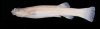 Trichomycterus longibarbatus
Topotype 52.9 mm SL |
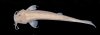 Trichomycterus
longibarbatus Trichomycterus
longibarbatusTopotype-Dorsal view |
 Trichomycterus
longibarbatus Trichomycterus
longibarbatusTopotype-Ventral view |
If you would like to contribute to the monthly factsheets with an article, information or photos, please e-mail me. You will of course be credited for your work.

If you would like to donate any denomination of monies to the site just click the above link button. All proceeds will go to running the site and hopefully to keep it going for a few years yet.

