SCOTCAT.COM
your internet guide to all things catfish
Pseudobunocephalus carvalhoi Crispim JL, Argüello P, Silva GSC, Oliveira C, Luckenbill KR, Sabaj MH, 2026 |
Image contributors to this species: |
P. Argüello (3) |
ScotCat Sources: |
|
|

Other Sources: |
|

Relevant Information: |
Abstract: Pterobunocephalus currently comprises two valid species: P. depressus described from the Guaporé River basin and P. dolichurus from the Trombetas River at its confluence with the Amazon River. A third nominal species, Bunocephalus albofasciatus, described from the upper Mamoré River basin, is presently considered a junior synonym of P. depressus. Based on a morphological approach, we describe here a new species of Pterobunocephalus from the upper Amazon basin (Napo, Pastaza, and Putumayo rivers) in Ecuador. The new species is distinguished from its congeners by the following combination of characters: (1) large eyes; (2) anterior margin of the mesethmoid relatively wide, shallowly concave, and sunken between anterior margins of premaxillae; (3) total number of anal-fin rays 10–11; and (4) in dorsal view, parapophysis of the fifth vertebra shaped like the blade of a shepherd’s axe with distal portion conspicuously and abruptly expanded (Crispim JL et al. 2026). Description: Pterobunocephalus carvalhoi is diagnosed from all congeners by its larger eye diameter, 11.2–13.9% of HL (vs. 6.0–8.5% of HL in P. dolichurus and 6.1–9.1% of HL in P. depressus). It further differs from P. depressus by having, in dorsal view, anterior bony margin of mesethmoid sunken between (posterior to) those of premaxillae vs. anterior bony margins of mesethmoid and premaxillae approximately level (or mesethmoid finishing more anteriorly than premaxillae) in P. depressus. The new species further differs from P. dolichurus in having a lower total number of anal-fin rays (10–11 vs. 15–16) and fifth vertebra with parapophysis slender proximally and conspicuously expanded distally, shaped like the blade of a shepherd’s axe in dorsal view vs. distal expansion lacking in P. dolichurus (Crispim JL et al. 2026). Habitat: Pterobunocephalus carvalhoi is known from the upper reaches of left-bank tributaries to the upper Amazon River. The new species was recorded at six sites, including the main channel of the Napo River and three of its tributaries, one site in the Bobonaza River (a tributary of the Pastaza River) and one in the Blanco River, which flows into the Putumayo River basin and connects it to the Napo basin during high waters (Crispim JL et al. 2026). Aquarium Care: Small species that can probably be kept as per other members of this family with a quite tank with sand and plants. Diet: Tablet foods and small live foods. Etymology: The specific epithet “carvalhoi” honours Brazilian ichthyologist Tiago Pinto Carvalho, Professor at the Universidad Nacional de Colombia, Bogotá, in recognition of his diverse and far-reaching contributions to the study of Neotropical fishes, particularly the taxonomy and systematics of the family Aspredinidae. A noun in a genitive case. |
Common Name: |
None |
Synonyms: |
None |
Family: |
Aspredinidae |
Distribution: |
South America: Main channel of the Napo River and three of its tributaries, one site in the Bobonaza River (a tributary of the Pastaza River) and one in the Blanco River, which flows into the Putumayo River basin and connects it to the Napo basin during high waters. |
Size: |
6.5cm. (2¾ins) |
Temp: |
24-28°c (75-83°f.) |
p.H. |
|
6.0-7.5. |
IUCN Red List |
Not Evaluated. |
Reference: |
Crispim,
J. L., Argüello, P., Silva, G. de S. da C. e
., Oliveira, C., Luckenbill, K. R., & Sabaj, M.
H. (2026). After eight decades: a new species
of Pseudobunocephalus
(Siluriformes: Aspredinidae) from the upper Putumayo,
Napo and Pastaza rivers, Ecuador. Neotropical Ichthyology,
24(1), e250162. |

Family: Aspredinidae Back to Ident-A-Cat Click on Thumbnails |
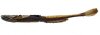 Pseudobunocephalus
carvalhoi
Pseudobunocephalus
carvalhoiLateral view-holotype-Napo River basin, Ecuador |
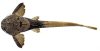 Pseudobunocephalus
carvalhoi Pseudobunocephalus
carvalhoiDorsal view-holotype-Napo River basin, Ecuador |
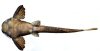 Pseudobunocephalus
carvalhoi Pseudobunocephalus
carvalhoiVentral view-holotype-Napo River basin, Ecuador |
If you would like to contribute to the monthly factsheets with an article, information or photos, please e-mail me. You will of course be credited for your work.

If you would like to donate any denomination of monies to the site just click the above link button. All proceeds will go to running the site and hopefully to keep it going for a few years yet.

