SCOTCAT.COM
your internet guide to all things catfish
Sperata acicularis Ferraris & Runge, 1999 |
Image contributors to this species: |
Ben Lee (2) Adrian Taylor (2) Allan James (2) |
ScotCat Sources: |
|

Other Sources: |
|
|


Relevant Information: |
Description: Determination of the the four currently accepted species, is a tricky thing. Only S. seenghala, a widespread species from India, can be comparatively easily identified, because in that species the eye is positioned in the first third of the skull, at about half of the skull length in the other species. So bony structures of the skull and the foreback must be compared to identify the three remaining species, a thing impossible to do in live juveniles. Sperata acicularis has a typical black spot to adipose fin. Colouration: Sperata acicularis can be easily identified due to the black spot in the adipose fin. Reproduction: Oviparous, distinct pairing possibly like other members of the same genus. Aquarium Care: The Sperata genera is not intended to be housed in a community aquarium apart from the reason of aggression towards other fish and conspecifics, and it grows too large for the normal tanks in our homes but this species of Sperata seems to only grow to 30/40cm in the confines of an aquarium. Etymology: The genus name Sperata: a-, belonging to: Maria Adolfine Sperat, Holly’s late mother-in-law, who had supported Holly’s studies with “great understanding” or “sympathy” (depending on the translation) [replacement name for Macrones Duméril 1856, preoccupied by Macrones Newman 1841 in Coleoptera]. The specific name acicularis: needlelike, referring to long, slender supraoccipital spine that most readily distinguishes it from its congeners. |
Common Name: |
Silver shovelnose catfish |
Synonyms: |
None |
Family: |
Bagridae |
Distribution: |
Asia: Myanmar; Irrawaddy, Bago and Tenasserim River systems. Type locality: Myanmar, Yangon Division, South Oak-ka-lar-pa market (eastern Yangon). |
Size: |
180.0cm. (6ft) |
Temp: |
23-26°C (73-79°F) |
p.H. |
|
6.0-7.2. |
IUCN Red List |
Although there is no information on the global population and its trends for this species, current evidence indicats that it is still relatively widespread and abundant. Despite being targeted in artisanal fisheries, the level of exploitation is not deemed high enough to be a threat to long-term survival of this species. Sperata acicularis is therefore assessed as Least Concern here, but needs updating (IUCN 2010). |
Reference: |
Breder, C.M. and D.E.
Rosen 1966 Modes
of reproduction in fishes. T.F.H. Publications, Neptune
City, New Jersey. 941 p. |

Family: Bagridae Back to Ident-A-Cat Click on Thumbnails |
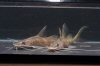 Sperata
acicularis Sperata
acicularis |
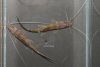 Sperata
acicularis Sperata
acicularisDorsal view |
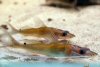 Sperata
acicularis Sperata
acicularis |
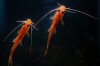 Sperata
acicularis Sperata
acicularisDorsal view |
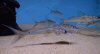 Sperata
acicularis Sperata
acicularisJuvenile |
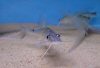 Sperata
acicularis Sperata
acicularisHead view- juvenile |
If you would like to contribute to the monthly factsheets with an article, information or photos, please e-mail me. You will of course be credited for your work.

If you would like to donate any denomination of monies to the site just click the above link button. All proceeds will go to running the site and hopefully to keep it going for a few years yet.

