SCOTCAT.COM
your internet guide to all things catfish
Ancistomus feldbergae (Oliveira, Rapp Py-Daniel, Zuanon, Rocha, 2012) |
Image contributors to this species: |
ScotCat Sources: |
|

Other Sources: |
|
|


Relevant Information: |
The genera Ancistomus has been reserected again on the latest paper by Armbruster et al. (2015). Peckoltia feldbergae, Hemiancistrus micrommatos, Ancistrus snethlageae, Hemiancistrus spilomma, and Hemiancistrus spinosissimus have all been transfered into this genus. The former name of Peckoltia feldbergae is now moved into Ancistomus. Reproduction: This is a cave spawner. Sexual Differences: Males have odontodes to their hard pectoral fin rays and also to the rear part of their body. Females are noticicably wider in the girth and do not possess the odotodes of the male. Aquarium Care: Should be kept at slightly higher temperatures and have a requirement for a higher oxygen intake. Peacfull inhabitants of an aquarium. Diet: Omnivore; vegetarian food, tablets and pellets, insect larvae, zooplankton and soft wood. Etymology: The specific name feldbergae: Named for Dr. Eliana Feldberg, researcher of Instituto Nacional de Pesquisas da Amazônia, for her many contributions on cytogenetics of Amazon fish. Remarks: For more information consult the paper referenced in the table by Armbruster, et al. 2015. You can still find the synonym on some online searches of Peckoltia feldbergae for this species. |
Common Name: |
L012, L013. |
Synonyms: |
Peckoltia feldbergae |
Family: |
Loricariidae |
Distribution: |
South America: Brazil: Rio Xingu. Type Locality: Río Xingu, Ilha de Babaquara, upstream of Altamira, 3°23'45"S, 52°12'16"W, Altamira, Pará, Brazil. |
Size: |
17.0cm. (6¾ins) |
Temp: |
25-29°c (77-85°f.) |
p.H. |
|
6.0-7.5. |
IUCN Red List |
Ancistomus feldbergae is endemic to Brazil, widely distributed in the Xingu River basin, upstream from Belo Monte, in the state of Pará. The species is frequent and abundant, inhabiting rapids and rocky areas, and is sold as an ornamental fish. The expected impacts from the installation of the Belo Monte hydroelectric plant will compromise approximately 12% of the calculated Range of Occurrence for A. feldbergae. Considering that a large part of its distribution area will not be affected, this project was not considered an impact that could lead the species to the risk of extinction. Similarly, the current level of exploitation for ornamental purposes should not cause significant impacts on the species. For this reason, Ancistomus feldbergae was categorised as Least Concern (LC), (IUCN 2022). |
Reference: |
|
Armbruster, Jonathan
W., David C. Werneke & Milton Tan. 2015
Three new species of saddled loricariid catfishes,
and a review of Hemiancistrus, Peckoltia, and allied
genera (Siluriformes). ZooKeys 480: 97-123. |

Family: Loricariidae Back to Ident-A-Cat Click on Thumbnails |
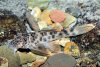 Ancistomus feldbergae
 |
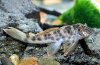 Ancistomus
feldbergae Ancistomus
feldbergae |
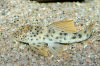 Ancistomus
feldbergae Ancistomus
feldbergae |
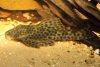 Ancistomus
feldbergae Ancistomus
feldbergae |
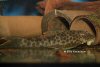 Ancistomus
feldbergae Ancistomus
feldbergae |
If you would like to contribute to the monthly factsheets with an article, information or photos, please e-mail me. You will of course be credited for your work.

If you would like to donate any denomination of monies to the site just click the above link button. All proceeds will go to running the site and hopefully to keep it going for a few years yet.

