SCOTCAT.COM
your internet guide to all things catfish
Panaque armbrusteri Lujan, Hidalgo & Stewart, 2010 |
Image contributors to this species: |
Johnny Jensen's Photographic Library (6) Graham Carr (1) Allan James (1) Dimitris Lysikatos (1) Haakon Haagensen (1) |
ScotCat Sources: |
|

Other Sources: |
|
|


Relevant Information: |
The type species of P. armbrusteri is in the Tapajós River and its tributaries but there are three other similar populations in the Xingú, Araguaia and Tocantins rivers to the east. These populations are still to be studied. The colour differences to these populations is that P. armbrusteri has a greenish/brown colouration and a pattern of very thin lines. Description: The differences between the Panaqolus and the Panaque genera is that the latter has an oval shaped mouth and the jaws have very large spatulate teeth with a single cusp, arranged in a v form and Panaqolus have a small number of spatulate teeth and are also a smaller genus. Panaque armbrusteri is diagnosed from all members of subgenus Scobinancistrus by having greater than seven dentary and premaxillary teeth (vs. three or four dentary and premaxillary teeth), by dentary and premaxillary tooth cusps being unicuspid (vs. bicuspid), and by dentary and premaxillary tooth cusps being short and ladleor spoon-shaped (vs. main tooth cusps being long and spatulate); and from all members of subgenus Panaqolus by having a body color pattern consisting of alternating dark brown to black and light brown to gray longitudinal stripes (vs. body colour pattern consisting of spots or vertical and/or oblique bands), by individuals, 114 mm SL having a hyaline caudal-fin window (vs. caudal fin uniformly opaque, banded, or spotted), and by reaching a maximum adult size of at least 345 mm SL (vs. ,150 mm SL). Aquarium Care: This species is a bit robust in an aquarium set-up so would need plenty of hiding places, plenty of water changes, due to their wood eating habits, and powerfull filtration. Needs a spacious aquarium. Diet: All Panaques and also the Panaqolus genera are wood eaters so would need this in an aquarium set-up. Feed also vegetable foods such as cucumber, courgette (zucchini) and sinking tablets. See further information from the reference, Lujan et al. Etymology: The specific name armbrusteri: Patronym honouring Jonathan W. Armbruster, ichthyologist, Associate Professor, and Curator of Fishes at the Auburn University Museum Fish Collection, for his many contributions to the field of ichthyology, and to our understanding of the Loricariidae in particular. A noun in apposition. |
Common Name: |
L027, L027b, LDA077, Panaque sp. "Tapajós" |
Synonyms: |
Lasiancistrus snethlageae, Ancistrus snethlageae, Peckoltia snethlageae, Hemiancistrus snethlageae. |
Family: |
Loricariidae |
Distribution: |
Brazil: Tapajós River and its tributaries. Type Locality: (Holotype) Brazil, Mato Grosso State, Tapajós River drainage, Teles Pires River, near the highway MT-416 ferry, 9u279070S, 56u309460W. |
Size: |
40.0cm. (16ins) |
Temp: |
25-29°c (77-85°f) |
p.H. |
|
5.5-7.0. |
IUCN Red List |
Panaque armbrusteri is endemic to Brazil and widely distributed in the Tapajós, Xingu, Tocantins, and Aripuanã river basins. The species is frequent and abundant in rheophilic environments, but not necessarily in rocky areas. Currently, no significant threats have been identified that would put its population at risk of extinction. Therefore, Panaque armbrusteri has been categorised as Least Concern (LC), (IUCN 2022). |
Reference: |
|
Chico Mendes Institute
for Biodiversity Conservation (ICMBio). 2022.
Panaque armbrusteri. The IUCN Red List of
Threatened Species 2022. |

Family: Loricariidae Back to Ident-A-Cat Click on Thumbnails |
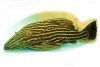 Panaque
armbrusteri Panaque
armbrusteri |
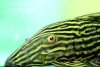 Panaque
armbrusteri Panaque
armbrusteriHead view |
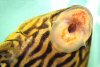 Panaque
armbrusteri Panaque
armbrusteri Mouth view |
 Panaque
armbrusteri Panaque
armbrusteri |
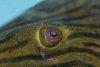 Panaque
armbrusteri Panaque
armbrusteri View of eye |
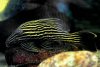 Panaque
armbrusteri Panaque
armbrusteri Adult |
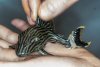 Panaque
armbrusteri Panaque
armbrusteri Juvenile |
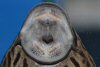 Panaque
armbrusteri Panaque
armbrusteri Mouth view |
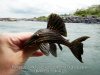 Panaque
armbrusteri Panaque
armbrusteriCachoeira Grande De Iriri |
 Panaque armbrusteri
 |
If you would like to contribute to the monthly factsheets with an article, information or photos, please e-mail me. You will of course be credited for your work.

If you would like to donate any denomination of monies to the site just click the above link button. All proceeds will go to running the site and hopefully to keep it going for a few years yet.

