SCOTCAT.COM
your internet guide to all things catfish
Peckoltia kahxi Dopazo, Araújo, Akama, & Wosiacki, 2026 |
Image contributors to this species: |
Jorge Garcia (1) Ingo Seidel (1) Dopazo et al. 2026 (3) |
ScotCat Sources: |
|

Other Sources: |
|

Relevant Information: |
First introduced in the "DATZ" magazine of August 1996. L247 is also the same species. Update: This was first coded L218/L247 and has now been descibed. Abstract: A new species of Peckoltia is described from the Rio Trombetas basin, Pará State, Brazil. The new species was investigated by morphological and molecular dataset and it can be distinguished from its congeners by: (1) mottled appearance, without defined spots or patches on the head and body, (2) partially naked abdomen with clusters of plates on the lateral sides of the abdomen from the pectoral to the pelvic region, (3) higher numbers of teeth on both jaws, (4) short odontodes in the cheek, (5) dark spots on the interradial membranes on all fins, (6) four saddles along the body, (7) lower lips with rounded papillae, (8) yellow stripes of the head obliquely positioned on head, not larger than eye orbit, (9) upper lip completely dark, and (10) dorsal margin of the hyomandibula concave. Genetic analysis revealed a genetic divergence of 2.3 to 15% between the new species and other species of the genus. Additionally, phylogenetic analysis based on a mitochondrial gene (Cytb) was conducted and the species was recognised as a monophyletic unit. The description of the new species contributes to the knowledge of the Trombetas River basin, a little-known tributary on the left bank of the Amazon River (Dopazo et al. 2026). Aquarium Care: No problem to keep and seem to be non-aggressive in a group of individuals. Should be kept in warm and soft to medium hard waters. Sexual Differences: Males have bristles behind the gill covers, on the pectoral fin spines and on the posterior part of the body. They also posses bristles on the upper caudal fin rays. Diet: Omnivores, easy to feed with frozen and live foods and also tablet and flake food. Should be kept at slightly higher temperatures and have a requirement for a higher oxygen intake. Etymology: The specific epithet “kahxi” refers to a waterfall for the Waiwai indigenous peoples (Pawana, 2026), who belong to the Cariban language family and are distributed throughout the northern Amazon, with populations in Brazil, Guyana, and Suriname (Instituto Socioambiental, 2009). The term is associated with the striking presence of rapids and waterfalls in the rivers that make up their territory, specifically in the region of the Mapuera and Trombetas rivers in the state of Pará, where the new species is distributed. Treated as a noun apposition. |
Common Name: |
L218, L247 |
Synonyms: |
None |
Family: |
Loricariidae |
Distribution: |
Brazil: Pará, Rio Trombetas, (Oriximiná). |
Size: |
12.0cm. (4¾ins) |
Temp: |
26-30°c (79-87°f) |
p.H. |
|
6.0-7.2. |
IUCN Red List |
Not Evaluated |
Reference: |
All L-Numbers Datz
Special: Habitat, Care & Diet. |

Family: Loricariidae Back to Ident-A-Cat Click on Thumbnails |
 Peckoltia
kahxi |
 Peckoltia
kahxi |
 Peckoltia
kahxi Holotype-Brazil, Pará State, municipality of Oriximiná, Cachoeira Porteira, Rio Trombetas basin |
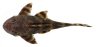 Peckoltia
kahxi Dorsal view-holotype-Brazil, Pará State, municipality of Oriximiná, Cachoeira Porteira, Rio Trombetas basin |
 Peckoltia
kahxi Ventral view-holotype-Brazil, Pará State, municipality of Oriximiná, Cachoeira Porteira, Rio Trombetas basin |
If you would like to contribute to the monthly factsheets with an article, information or photos, please e-mail me. You will of course be credited for your work.

If you would like to donate any denomination of monies to the site just click the above link button. All proceeds will go to running the site and hopefully to keep it going for a few years yet.

