SCOTCAT.COM
your internet guide to all things catfish
Peckoltia lineola Armbruster, 2008 |
Image contributors to this species: |
Johnny Jensen's Photographic Library (4) Allan James (2) John Bradley (1) Haakon Haagensen (1) Jorge Garcia (2) |
ScotCat Sources: |
|

Other Sources: |
|


Relevant Information: |
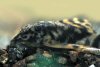
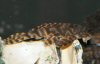
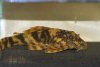
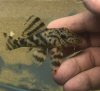
Description: Peckoltia lineola can be identified from all other Peckoltia except P. braueri, P. caenosa, P. cavatica, and P. vermiculata by having vermiculations on the head and snout. Peckoltia lineola can be identified from P. braueri, P. cavatica, and P. vermiculata by having thick vermiculations almost as wide as the pupil on the compound pterotics and snout (vs. thin vermiculations much narrower than the pupil diameter and by also having large spots on the compound pterotics and snout (vs. no spots); from P. braueri and P. cavatica by lacking an orange band in the dorsal fin; from P. cavatica by having the vermiculations cross the bones like the compound pterotic (vs. dark lines only outlining the plates and bones of the head); from P. caenosa by having dark bands in the fins (vs. light spots), by having long, thick, longitudinal lines on the abdomen (vs. vermiculations with a random orientation), by having the light interspaces on the snout of about the same width of the black spots and lines (vs. light vermiculations narrower than dark ones), and by having the light bands of the caudal at least 50% width of dark bands (vs. 25%); and from P. vermiculata by not having the vermiculations coming from a central point on the parieto-supraoccipital. Peckoltia lineola is similar to P. brevis except that some of the spots on the head and snout combine to form lines (vs. all spots separate) and the spots on the abdomen combine to form long, thick longitudinal lines (vs. spots separate). Aquarium Care: Should be kept at slightly higher temperatures and have a requirement for a higher oxygen intake. Peacfull inhabitants of an aquarium. Sexual Differences: The main collection consisted of only nuptial males. Nuptial males with hypertrophied odontodes on sides and posterior part of head; hypertrophied odontodes becoming larger posteriorly. Hypertrophied odontodes on upper caudal-fin spine and adipose spine. Upper caudal-fin spine thickened. Odontodes on pectoral-fin spine not noticeably larger. Etymology: The specific name lineola: Latin for little line, refers to the short lines on the compound pterotic. Remarks: For more information consult the paper referenced in the table by Armbruster, J.W. 2008. |
Common Name: |
Synonyms: |
None |
Family: |
Loricariidae |
Distribution: |
South America: Río Ventuari in Venezuela and Río Iniridá in Colombia. |
Size: |
12.0cm. (4¾ins) |
Temp: |
25-29°c (77-85°f) |
p.H. |
|
6.0-7.5. |
IUCN Red List |
Peckoltia lineola is known from the upper and lower Ventuari River, but only two localities are present and only few individuals are known. The Ventuari River has been fairly well explored, but no collections have been procured from middle portions suggesting that the species may be relatively rare. The species is highly desired in the aquarium trade, and one of the main localities for the species is next to a national park that is experiencing an increase in mining. There are two locations based on threats and inferred continuing declines in habitat extent and quality, and population size. With an extent of occurrence of 6,105 km2 and area of occupancy (AOO) of 1,384 km2, the species is considered Vulnerable. (IUCN 2023). |
Reference: |
Armbruster, J.W.
2023. Peckoltia lineola. The IUCN Red List
of Threatened Species 2023. |

Family: Loricariidae Back to Ident-A-Cat Click on Thumbnails |
 Peckoltia lineola
 |
 Peckoltia
lineola Peckoltia
lineola |
 Peckoltia
lineola Peckoltia
lineolaHead view |
 Peckoltia
lineola Peckoltia
lineola |
 Peckoltia
lineola Peckoltia
lineola |
 Peckoltia
lineola Peckoltia
lineola |
 Peckoltia
lineola Peckoltia
lineola |
 Peckoltia
lineola Peckoltia
lineola Male |
 Peckoltia
lineola Peckoltia
lineolaHead view |
 Peckoltia
lineola Peckoltia
lineola |
If you would like to contribute to the monthly factsheets with an article, information or photos, please e-mail me. You will of course be credited for your work.

If you would like to donate any denomination of monies to the site just click the above link button. All proceeds will go to running the site and hopefully to keep it going for a few years yet.

