SCOTCAT.COM
your internet guide to all things catfish
Peckoltia cavatica Armbruster & Werneke, 2005 |
Image contributors to this species: |
Robin Warne (1) Danny Blundell (2) |
ScotCat Sources: |
|

Other Sources: |
|


Relevant Information: |
Description: Dorsal spines (total): 2; Dorsal soft rays (total): 7; Anal spines: 1; Anal soft rays: 4. Peckoltia cavatica can be identified from all other described Peckoltia except P. braueri by the presence of an orange band in the dorsal fin and by having thin, black lines that outline the plates and bones of the head. The only other species of Peckoltia similar to P. cavatica in colouration are P. lineola and P. vermiculata, which can be identified by having vermiculations on the dorsal head bones and plates (vs. colouration confined to the borders between bones and plates in P. cavatica). The Peckoltia genera possesses a medium sized mouth with the same amount of teeth in the lower and upper jaw. Aquarium Care: Should be kept at slightly higher temperatures and have a requirement for a higher oxygen intake. Peacfull inhabitants of an aquarium. Sexual Differences: Males have bristles behind the gill covers, on the pectoral fin spines and on the posterior part of the body. They also posses bristles on the upper caudal fin rays. Diet: Omnivores, easy to feed with frozen and live foods and also tablet and flake food. |
Common Name: |
Dusky Worm Line Peckoltia |
Synonyms: |
None |
Family: |
Loricariidae |
Distribution: |
South America: Rupununi River in Guyana. Type Locality: Guyana, Rupununi (Region 9), 3.7 km SSE Massara, 03.86228º, –059.28439º. |
Size: |
7.5cm. (3ins) |
Temp: |
23-27°c (73-81°f) |
p.H. |
|
6.0-7.5. |
Reference: |
Armbruster, J.W. and
D.C. Werneke, 2005. Peckoltia cavatica, a
new loricariid catfish from Guyana and a redescription
of P. braueri (Eigenmann 1912) (Siluriformes). Zootaxa
882:1-14. |

Family: Loricariidae Back to Ident-A-Cat Click on Thumbnails |
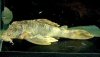 Peckoltia
cavatica Peckoltia
cavatica |
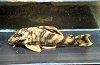 Peckoltia
cavatica Peckoltia
cavatica |
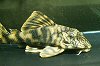 Peckoltia
cavatica Peckoltia
cavaticaHead view |
If you would like to contribute to the monthly
factsheets with an article, information or photos, please e-mail
me. You will of course be credited for your work.

If you would like to donate any denomination of monies to the site just click the above link button. All proceeds will go to running the site and hopefully to keep it going for a few years yet.

