SCOTCAT.COM
your internet guide to all things catfish
Pseudacanthicus pitanga Chamon, 2015 |
Image contributors to this species: |
Johnny Jensen's Photographic Library (3) Saul Paredes (2) Stuart McIntosh (1) Pleco John (2) |
ScotCat Sources: |
|

Other Sources: |
|
|


Relevant Information: |
Description: Dorsal spines (total): 1; Dorsal soft rays (total): 9; Anal spines: 1; Anal soft rays: 5; Vertebrae: 29. Pseudacanthicus pitanga is distinguished from its congeners (except P. leopardus) by its colour pattern with intense orange to red fins ( vs. dark background colour with white spots in P. serratus and P. fordii or grey background colour with black blotches in P. histrix and P. spinosus ); distinguished from P. leopardus by the presence of dark blotches anostomosing to form continuous zigzag bands alongside longitudinal keels; absence of blotches on ventral surface of body; faint blotches on head and all fins with orange to red colour on unbranched ray and sometimes on subsequent branched rays ( dark blotches conspicuous, never anostomosed; large dark blotches on ventral surface; conspicuous dark blotches on head; and red colour restricted to dorsal and caudal fin rays ); Pseudacanthicus pitanga can be further diagnosed from congeners by the following combination of osteological characters: contact of sphenotic with 6th infraorbital absent, lateral surface of metapterigoid channel triangular (vs. rounded in remaining species), posterior area of contact between cleithrum and coracoid ventrally expanded (vs. straight in remaining species). The Pseudacanthicus genera have the common name of Cactus catfishes due to their bodies being covered with spiny odontodes. Their mouths are small with a few bicuspid teeth in the jaws. Aquarium Care: Pseudacanthicus can be highly territorial especially when adult, so a large aquarium of at least 5ft (150cm) would be beneficial to this species. Provide plenty of shelters in the aquarium and line -of- sight barriers if more than one species is kept. Diet: As with all of this genera they are carnivores and would need to be fed on frozen foods such as Artemia, mosquito larvae, mysis and shrimp. They can also be fed pellet and tablet foods. Remarks: The Tocantins in Brazil is the only river where 3 species of Pseudacanthicus occur together, P. pitanga, P. major and P. sp. (L079), (Mark Henry Sabaj 2019). |
Common Name: |
Synonyms: |
None |
Family: |
Loricariidae |
Distribution: |
Brazil: Rio Tocantins, Pará |
Size: |
35.0cm. (14ins) |
Temp: |
25-29°c (77-85°f) |
p.H. |
|
6.0-7.5. |
Reference: |
Chamon, C. C;
2015. Pseudacanthicus pitanga: a new species of Ancistrini
(Siluriformes: Loricariidae: Hypostominae) from rio
Tocantins Basin, North Brazil. Zootaxa 3973 (2): 309–320
www.mapress.com/zootaxa. |

Family: Loricariidae Back to Ident-A-Cat Click on Thumbnails |
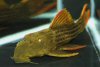 Pseudacanthicus
pitanga Pseudacanthicus
pitanga |
 Pseudacanthicus
pitanga Pseudacanthicus
pitanga |
 Pseudacanthicus
pitanga Pseudacanthicus
pitanga |
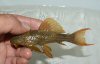 Pseudacanthicus
pitanga Pseudacanthicus
pitanga |
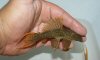 Pseudacanthicus
pitanga Pseudacanthicus
pitanga |
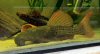 Pseudacanthicus
pitanga Pseudacanthicus
pitanga |
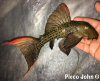 Pseudacanthicus
pitanga Pseudacanthicus
pitanga |
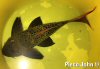 Pseudacanthicus
pitanga Pseudacanthicus
pitangaDorsal view |
If you would like to contribute to the monthly factsheets with an article, information or photos, please e-mail me. You will of course be credited for your work.

If you would like to donate any denomination of monies to the site just click the above link button. All proceeds will go to running the site and hopefully to keep it going for a few years yet.

