SCOTCAT.COM
your internet guide to all things catfish
Rhadinoloricaria macromystax (Günther, 1869) |
Image contributors to this species: |
Mark Henry Sabaj (1) Johnny Jensen's Photographic Library (1) |
ScotCat Sources: |
|
|

Other Sources: |
|


Relevant Information: |
Description: The type species of R. macromystax is Loricaria macromystax Günther, 1869 from Peru, Amazon River. Gender: feminine. This genus is distributed in the upper Amazon and Orinoco River basins, Essequibo, and Tocantins drainages. Although poorly known and uncommon in collections, Rhadinoloricaria is known to occur over sandy substrates. Ecological and behavioral data are unavailable. Most studies of Rhadinoloricaria are based on the holotype, which is in a poor state of preservation (particularly its mouth, which is one of the most important features for the study of this group). The holotype is an adult with complete abdominal plate cover; smaller specimens have incomplete abdominal plate cover forming a double median row of platelets. This feature, which is also observed in Crossoloricaria, and one species of Dasyloricaria, could reflect a common developmental pattern of abdominal plates among these taxa (Covain, R et al 2015). Habitat: Occurs in the main river and major tributaries, always over sandy beaches. Reproduction: These taxa are abdomino-lip brooders. Eggs are laid in a single layered mass, and are attached to the surface of the lower lip and abdomen of the male. Aquarium Care: Likes to bury itself in a deep sandy bottom substrate with only the eyes being visible so you would need to provide this for aquarium maintenance. A good water current and partial water changes are needed to keep this species/genera in good condition. As this genera is smaller than the other larger lip brooders of the Pseudohemiodon genus, Rhadinoloricaria would be a better bet for aquarium husbandry. Diet: Feed with tablet foods, frozen mosquito larvae, daphnia etc. Etymology: The specific name macromystax: macro-, from makrós long or large; mýstax, moustache, moustache, referring to long barbel on upper lip, which extends beyond axil of pectoral fin. |
Common Name: |
None |
Synonyms: |
Loricaria macromystax |
Family: |
Loricariidae |
Distribution: |
South America: Upper Amazon River basin. |
Size: |
14.0cm (5½inch) |
Temp: |
24-27°c (75-81°f) |
p.H. |
|
6.5-7.5. |
IUCN Red List |
The species is listed as Data Deficient because of a lack of information on its exact range, population status, and the threats that are affecting it, so it does need updating (IUCN 2016). |
Reference: |
Covain, R., S. Fisch-Muller,
C. Oliveira, J. H. A. Mol, J. I. Montoya-Burgos and
S. Dray 2015 (29 Oct.) Molecular phylogeny
of the highly diversified catfish subfamily Loricariinae
(Siluriformes, Loricariidae) reveals incongruences
with morphological classification. Molecular Phylogenetics
and Evolution v. 94 (Pt. B): 492-517 [1-26]. |

Family: Loricariidae Back to Ident-A-Cat Click on Thumbnails |
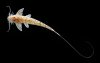 Rhadinoloricaria macromystax
 |
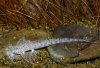 Rhadinoloricaria
macromystax Rhadinoloricaria
macromystax |
If you would like to contribute to the monthly factsheets with an article, information or photos, please e-mail me. You will of course be credited for your work.

If you would like to donate any denomination of monies to the site just click the above link button. All proceeds will go to running the site and hopefully to keep it going for a few years yet.

