SCOTCAT.COM
your internet guide to all things catfish
Rineloricaria capixaba Mejia & Buckup, 2026 |
Image contributors to this species: |
ScotCat Sources: |
|
|

Other Sources: |
|

Relevant Information: |
Abstract: Researchers have described Rineloricaria capixaba, a new species of whiptail catfish belonging to the family Loricariidae and subfamily Loricariinae, from southeastern Brazil. The species was identified through a combination of genetic and morphological analyses of populations previously classified as Rineloricaria steindachneri. The new species occurs in coastal river basins of Espírito Santo, including the Itabapoana, Itapemirim, Iconha, and Benevente river systems. The discovery also reveals how ancient sea-level changes influenced freshwater fish evolution by repeatedly connecting and separating neighbouring river systems. Although Rineloricaria capixaba closely resembles R. steindachneri, researchers identified anatomical differences supporting its recognition as a separate species. The new species has an elongated body covered with bony plates, characteristic of whiptail catfish. Its body features light-brown colouration with four or five darker transverse bands. The dorsal fin has a prominent dark-brown band, while the caudal fin displays two dark vertical bands. Mature males develop enlarged odontodes, small tooth-like structures, along the sides of the head and on the pectoral fins. These characteristics, together with differences in body proportions, bony plates, and genetic markers, help distinguish the new species from closely related Rineloricaria (Mejia & Buckup 2026). Reproduction: The Rineloricaria species are usually cave spawners, where the female will place their eggs after the male has cleaned inside. The male will then guard and fan the eggs until hatching. The eggs will hatch in 4-5 days whereas the male can now be removed. More breeding information can be found here in the articles breeding section. Lays up to 200 green eggs. The male may be nervous if disturbed but rearing the fry separately poses no problems. Aquarium Care: As with all Rineloricaria provide long leaved plants or bamboo stalks for them to hang on to. Also include rocks and bogwood into the aquarium with a sand substrate. Provide some pvc piping for breeding purposes. A good community tank fish if kept with non aggressive species. Diet: Omnivore. Vegetable food such as cucumber and other various foods such as tablet, flake and frozen. Etymology: The specific name capixaba is used as an adjective. This is a Brazilian Portuguese word derived from the Tupi-Guarani native American language. It originally meant “plantation land” but the term is currently used as the demonym to designate inhabitants of the Brazilian State of Espírito Santo, where the new species is distributed. |
Common Name: |
None |
Synonyms: |
None |
Family: |
Loricariidae |
Distribution: |
South America: Brazil, Espírito Santo State, Conceição do Castelo municipality, Itapemirim River. |
Size: |
17.0cm. (6¾ins) |
Temp: |
22-25°c (71-77°f) |
p.H. |
|
6.0-7.0. |
IUCN Red List |
Rineloricaria capixaba may be classified in the Least Concern (LC) category according to the IUCN criteria for evaluation of risks of extinction (IUCN Standards and Petitions Committee, 2024). |
Reference: |
Aqua
Info 2026. |

Family: Loricariidae Back to Ident-A-Cat Click on Thumbnails |
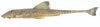 Rineloricaria
capixaba Holotype-male, Brazil, Espírito Santo State, Conceição do Castelo municipality, Itapemirim River |
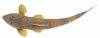 Rineloricaria
capixaba Dorsal view-holotype-male, Brazil, Espírito Santo State, Conceição do Castelo municipality, Itapemirim River |
 Rineloricaria
capixaba Ventral view-holotype-male, Brazil, Espírito Santo State, Conceição do Castelo municipality, Itapemirim River |
If you would like to contribute to the monthly factsheets with an article, information or photos, please e-mail me. You will of course be credited for your work.

If you would like to donate any denomination of monies to the site just click the above link button. All proceeds will go to running the site and hopefully to keep it going for a few years yet.

