SCOTCAT.COM
your internet guide to all things catfish
Synodontis tourei Daget, 1962 |
Image contributors to this species: |
Hippocampus Bildarchiv (1) Andrew Rushworth (1) Rob Palmer (1) |
ScotCat Sources: |
|

Other Sources: |
|
|


Relevant Information: |
Description: Dorsal spines (total): 1; Anal spines: 0. Diagnosis: gill slits not extending ventrally beyond pectoral-fin insertions; post-orbital length at least 60% of snout length; maxillary barbels longer than head, unbranched, without tubercles, but bordered by a narrow and very short basal membrane; outer mandibular barbels with long, simple and thin ramifications (6 in the lectotype); branches of inner mandibular barbels shorter, thicker, subdivided and tuberculate; mandibular teeth short and narrow, numbering 20-39 (39 in the lectotype); denticulations of pectoral-fin spines very weak on outer margins, much stronger on inner margin; dorsal-fin spine smooth anteriorly, except for a few apical denticles; humeral process narrow, triangular, pointed, at least twice as deep as long and not keeled ventrally; adipose fin not very high nor very long, and distinctly separated from rayed dorsal fin; body covered with irregular, more or less coalesced spots; belly dark. Habitat: This species is restricted to the Upper Bafing river at Ballay, a tributary of the Senegal River in the Fouta Djallon, Guinea. Colouration: rather dark, with a network of more or less distinct light wavy bands; fins, in particular the caudal, with well visible spots aligned in bands. Aquarium Care: As for most of this genera which are problem free. A small and inoffensive species and would do well in a mid-sized community tank. Etymology: The specific name tourei: In honour of Moussa Touré, forestry inspector in Mamou, a city in the Fouta Djallon area of Guinea, where this catfish occurs. |
Common Name: |
None |
Synonyms: |
None |
Family: |
Mochokidae |
Distribution: |
Africa: Bafing River, (Senegal basin), Guinea. Type locality: Bafing à Ballay, Guinée. |
Size: |
10.0cm. (4ins) |
Temp: |
23-26°C (73-79°F) |
p.H. |
|
6.5-7.2. |
IUCN Red List |
This species is restricted to the Upper Bafing river at Ballay, a tributary of the Senegal River in the Fouta Djallon, Guinea with the best estimate of its area of occupancy (AOO) at 4 km2. It is threatened by a decline in habitat quality due to gold and platinum mining and potentially from deforestation. There is one location based on this threat. This species is therefore assessed as Critically Endangered, (IUCN 2020). |
Reference: |
Fricke, R., Eschmeyer,
W.N. and Van der Laan, R. (eds). 2020. Eschmeyer's
Catalog of Fishes: genera, species, references. |

Family: Mochokidae Back to Ident-A-Cat Click on Thumbnails |
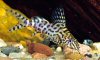 Synodontis
tourei Synodontis
tourei |
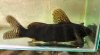 Synodontis
tourei Synodontis
toureiAdult Colouration |
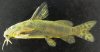 Synodontis
tourei Synodontis
toureiAdult Colouration |
If you would like to contribute to the monthly factsheets with an article, information or photos, please e-mail me. You will of course be credited for your work.

If you would like to donate any denomination of monies to the site just click the above link button. All proceeds will go to running the site and hopefully to keep it going for a few years yet.

